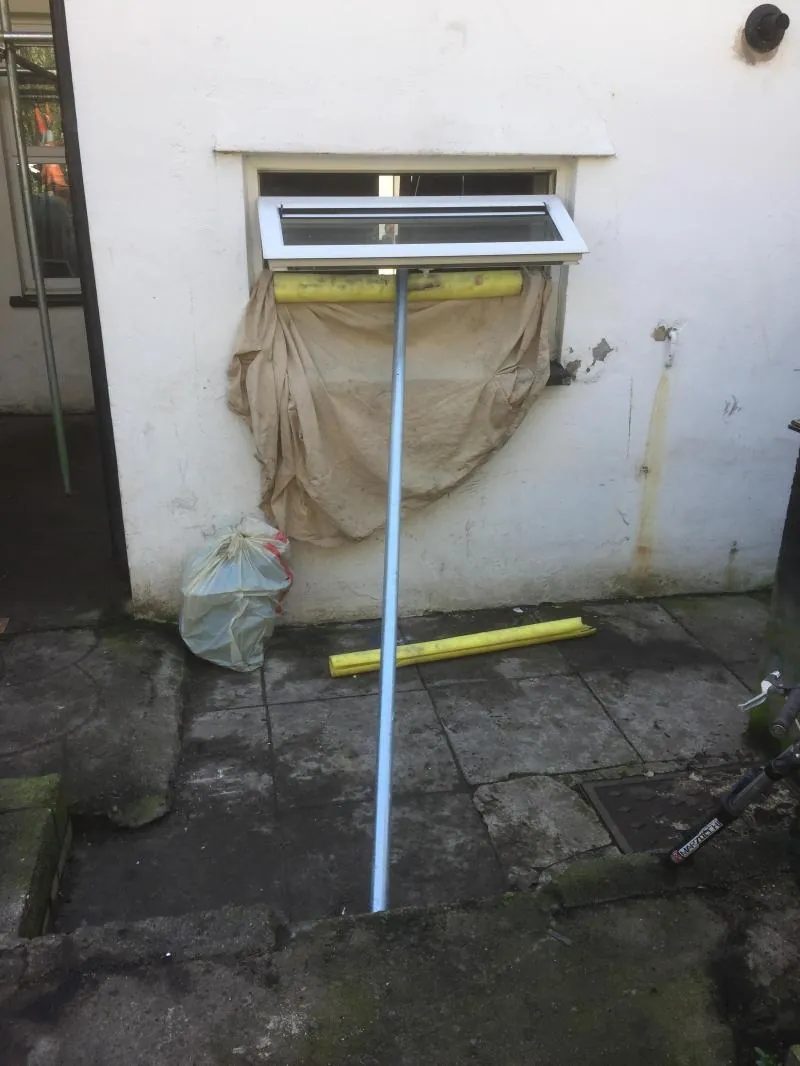
 Domestic Scaffolding
 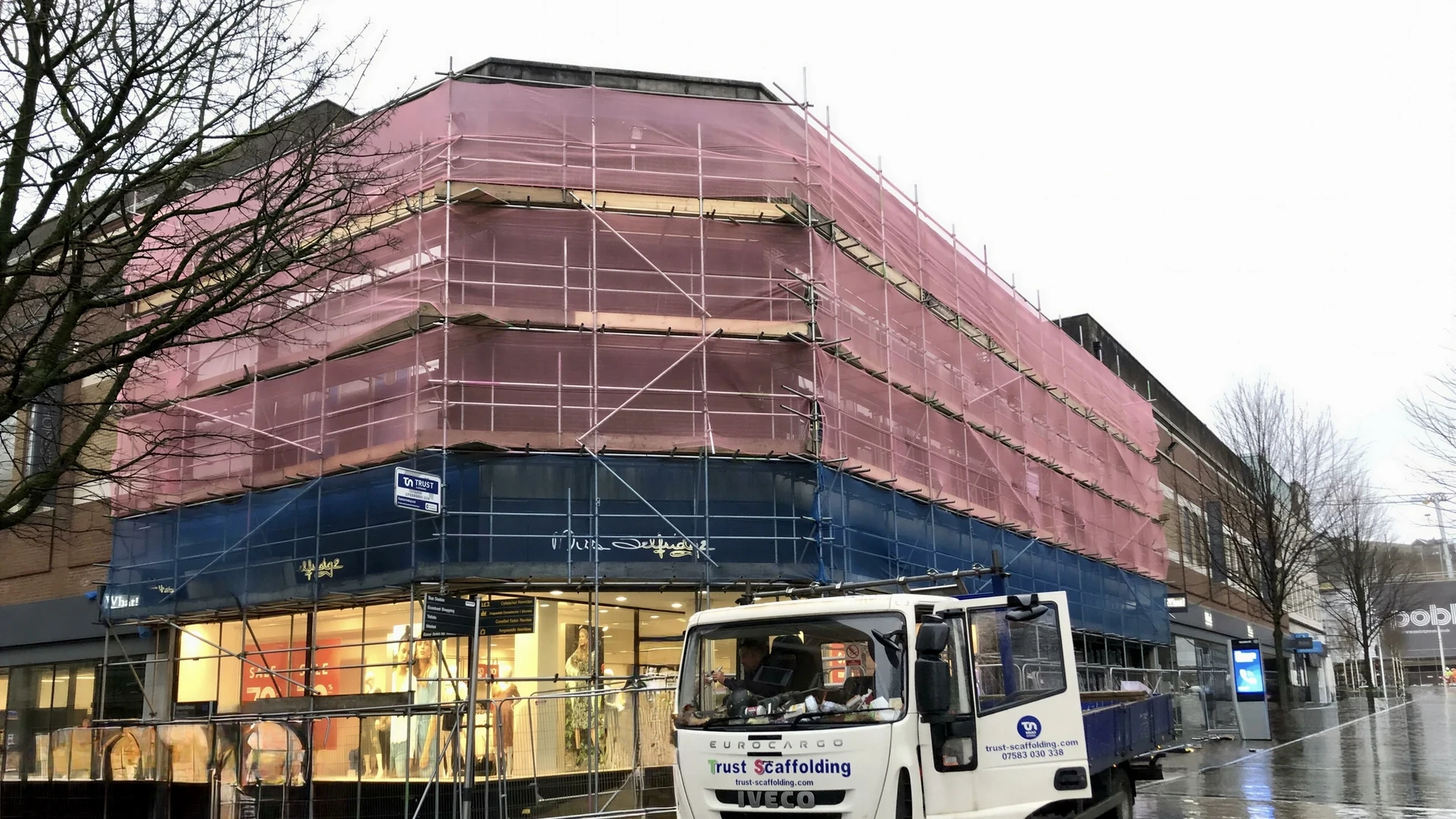 Commercial Scaffolding
 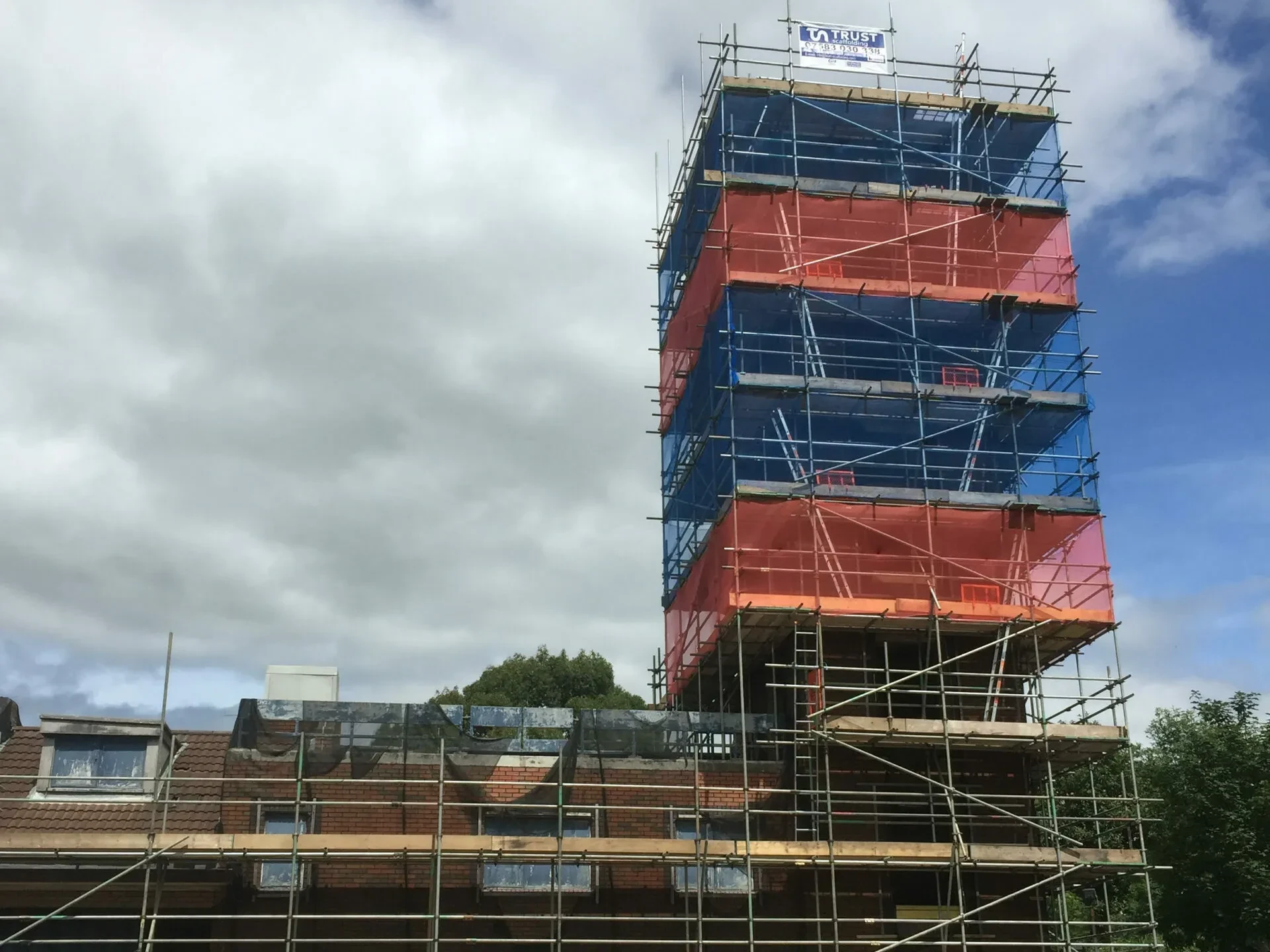 Industrial Scaffolding
 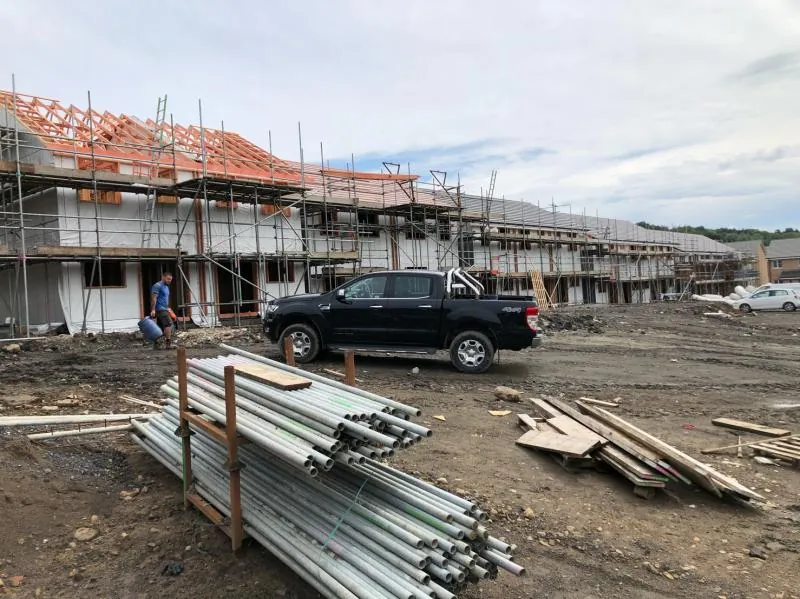 New Build Scaffolding
 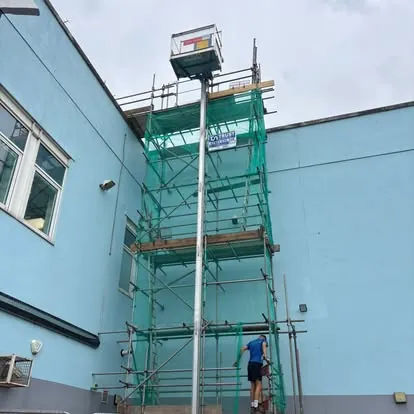 Access Towers
 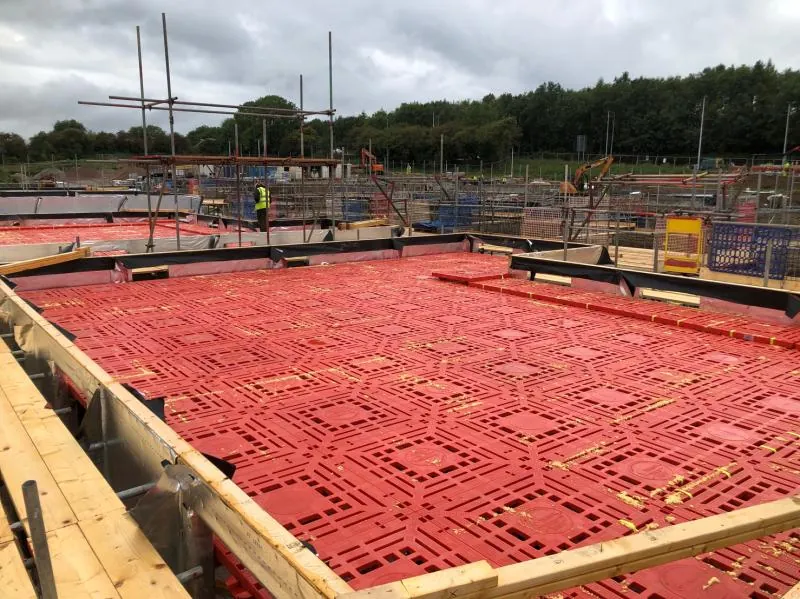 Interior Scaffolding
 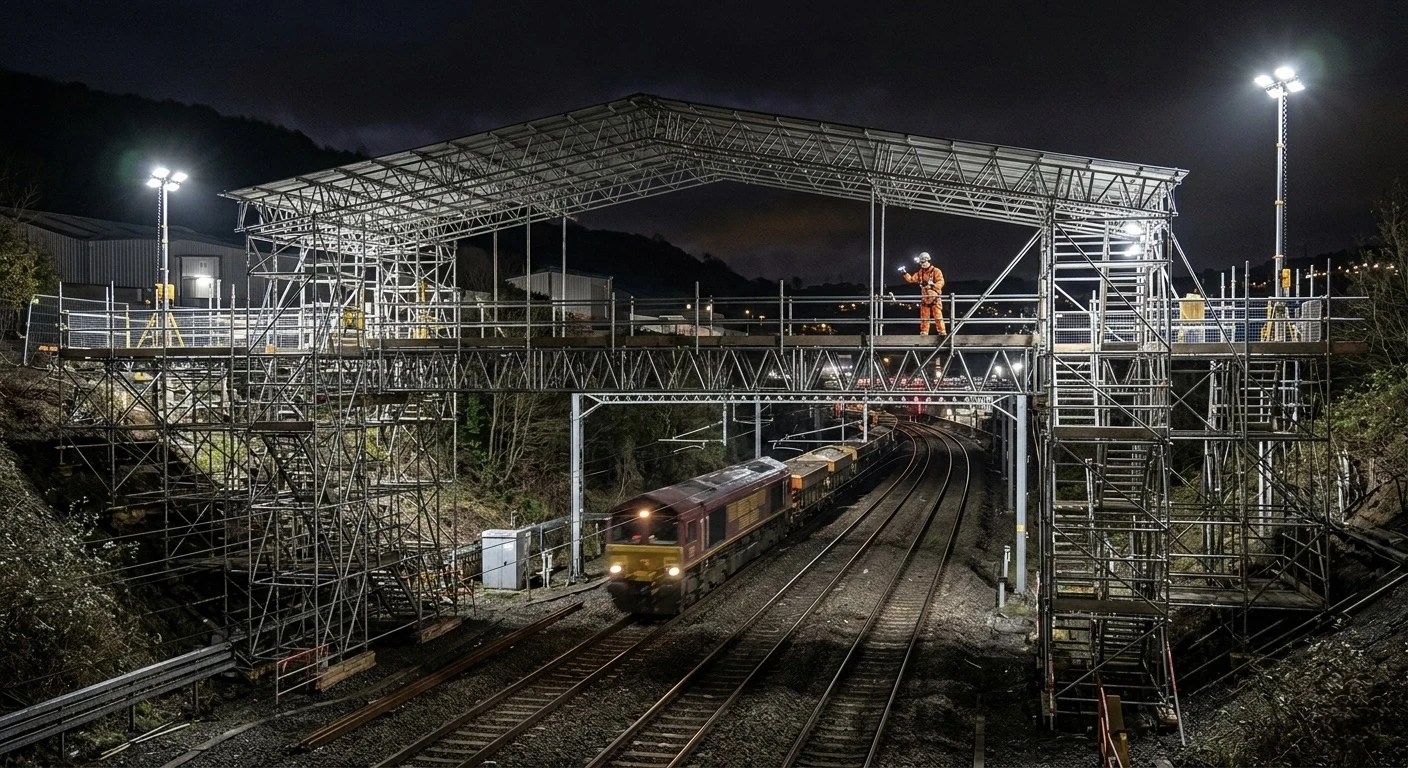 Rail Scaffolding
 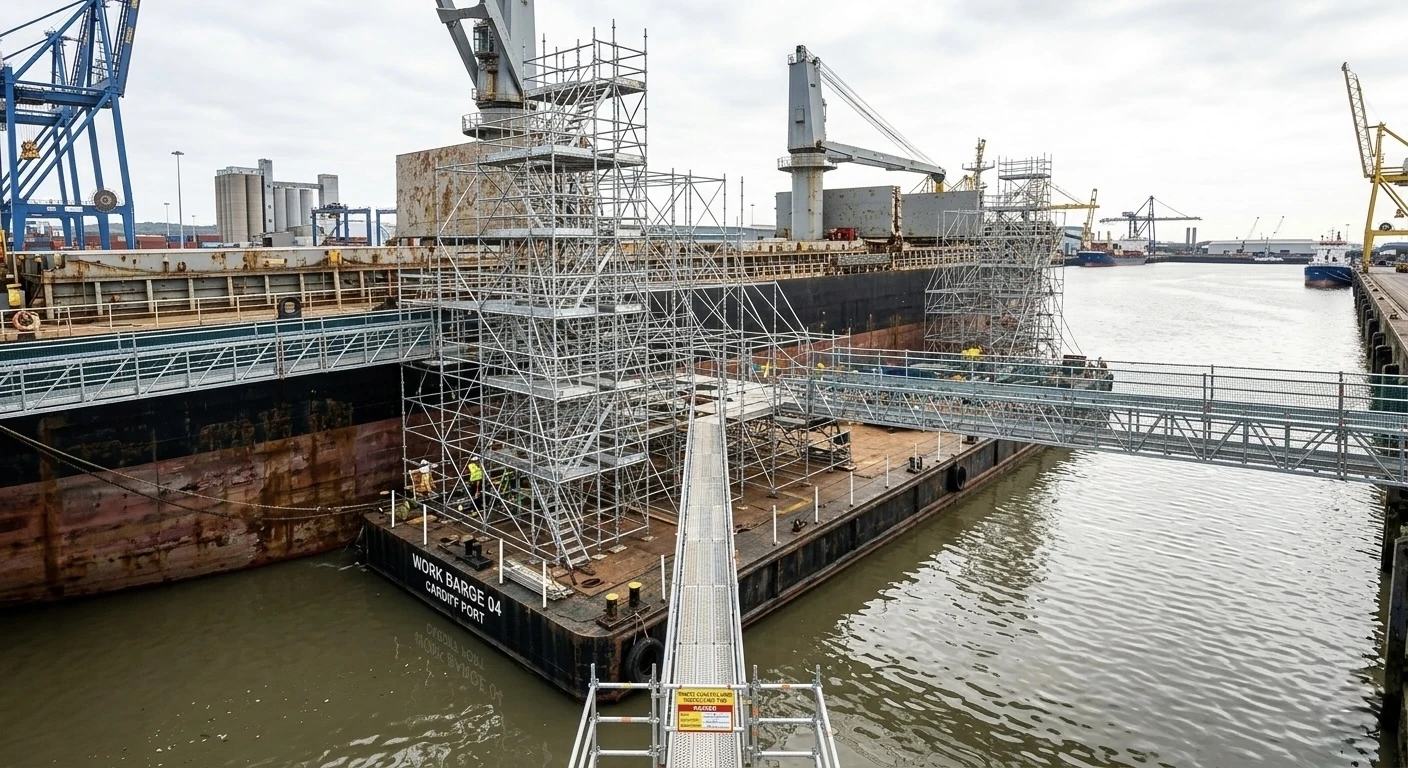 Marine Scaffolding
  Bridge Scaffolding
  Heritage Scaffolding
  Solar Panel Scaffolding
 Swansea
  Port Talbot
  Neath
Neath  Llanelli
  Carmarthen
  Ammanford
  Haverfordwest
  Pembroke Dock
  Cardiff
  Newport
  Bridgend
  Pontypridd
 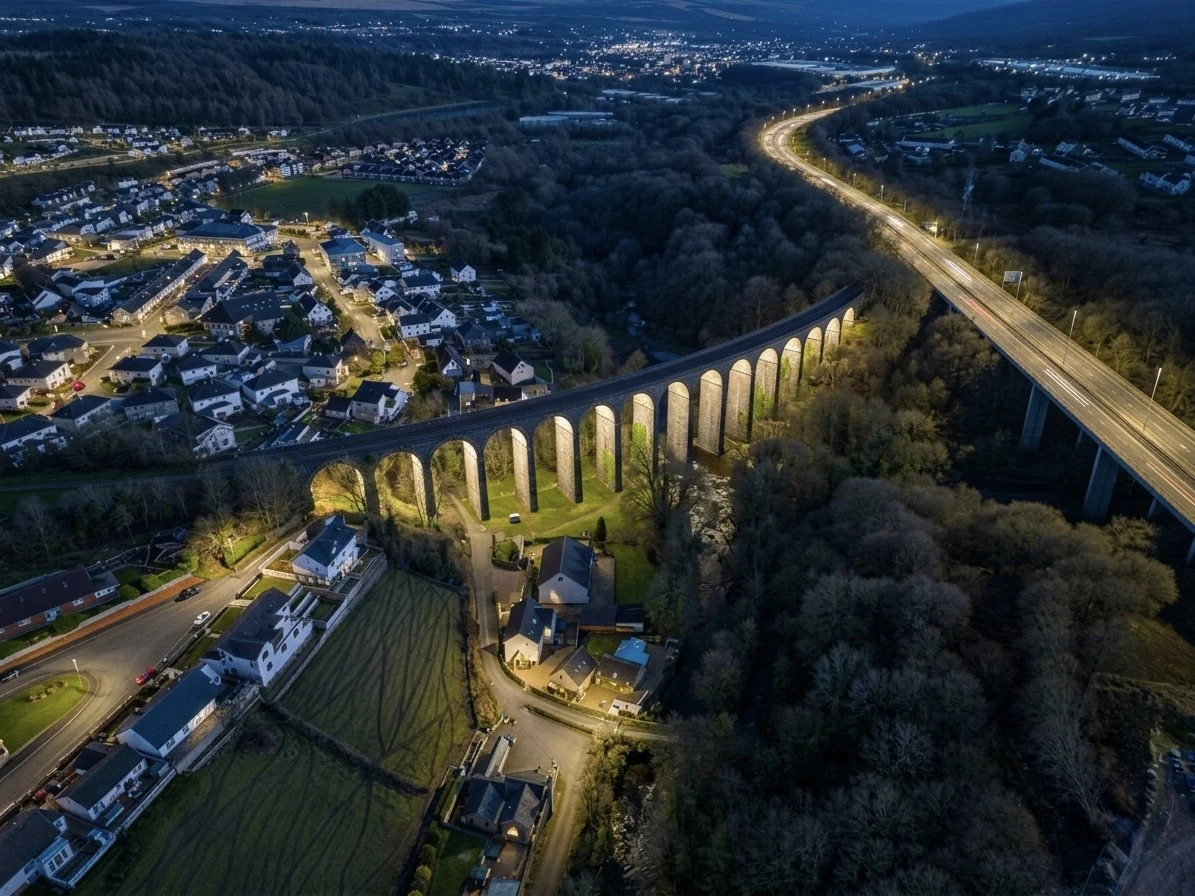 Merthyr Tydfil
 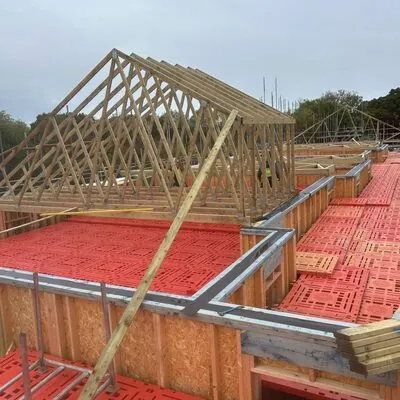 The Valleys
  Caerphilly
  Bristol
 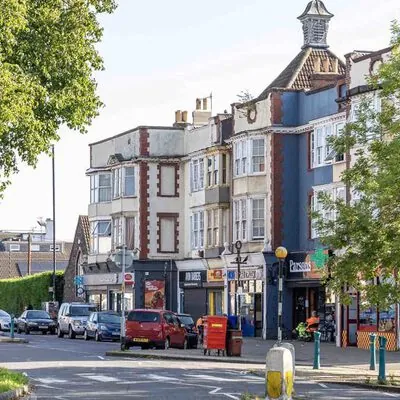 Avonmouth
  Bath
Bath  Weston-super-Mare
 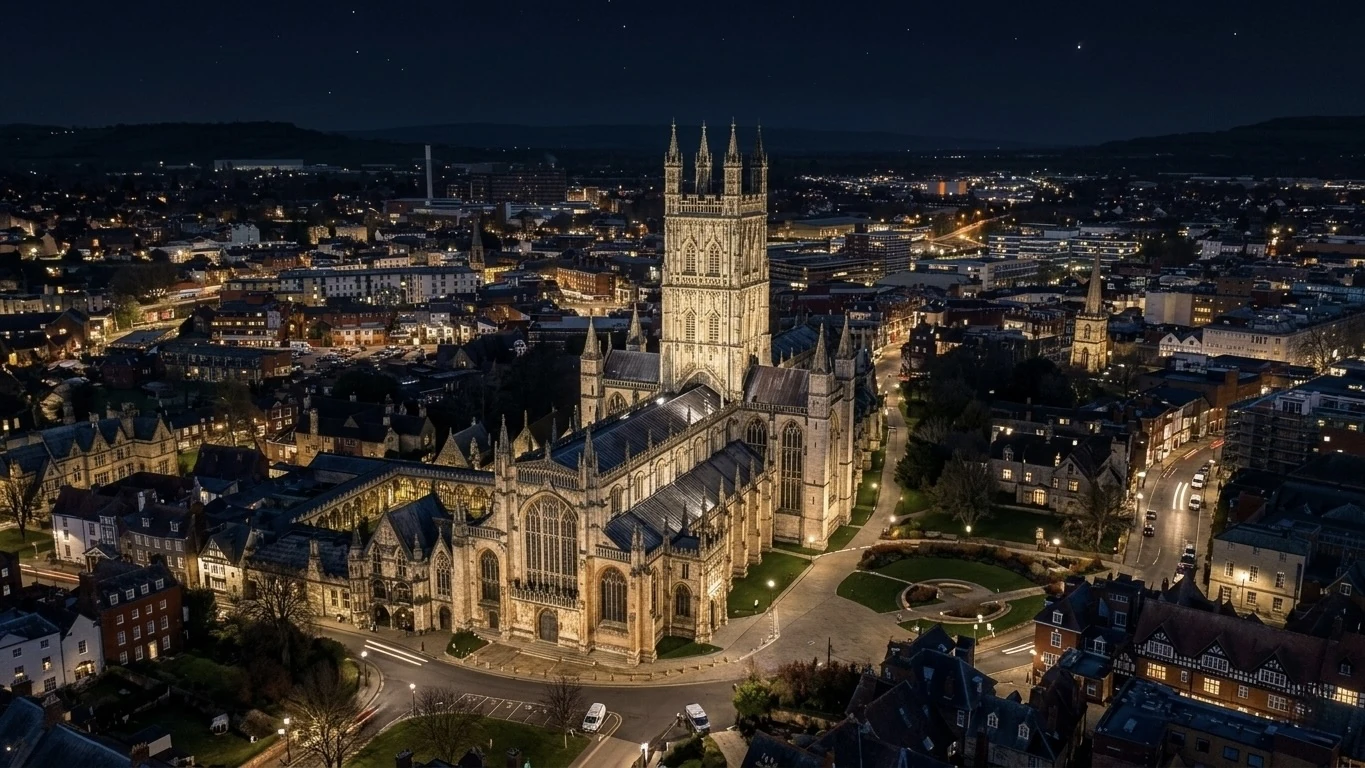 Gloucester
  Cheltenham
  Taunton

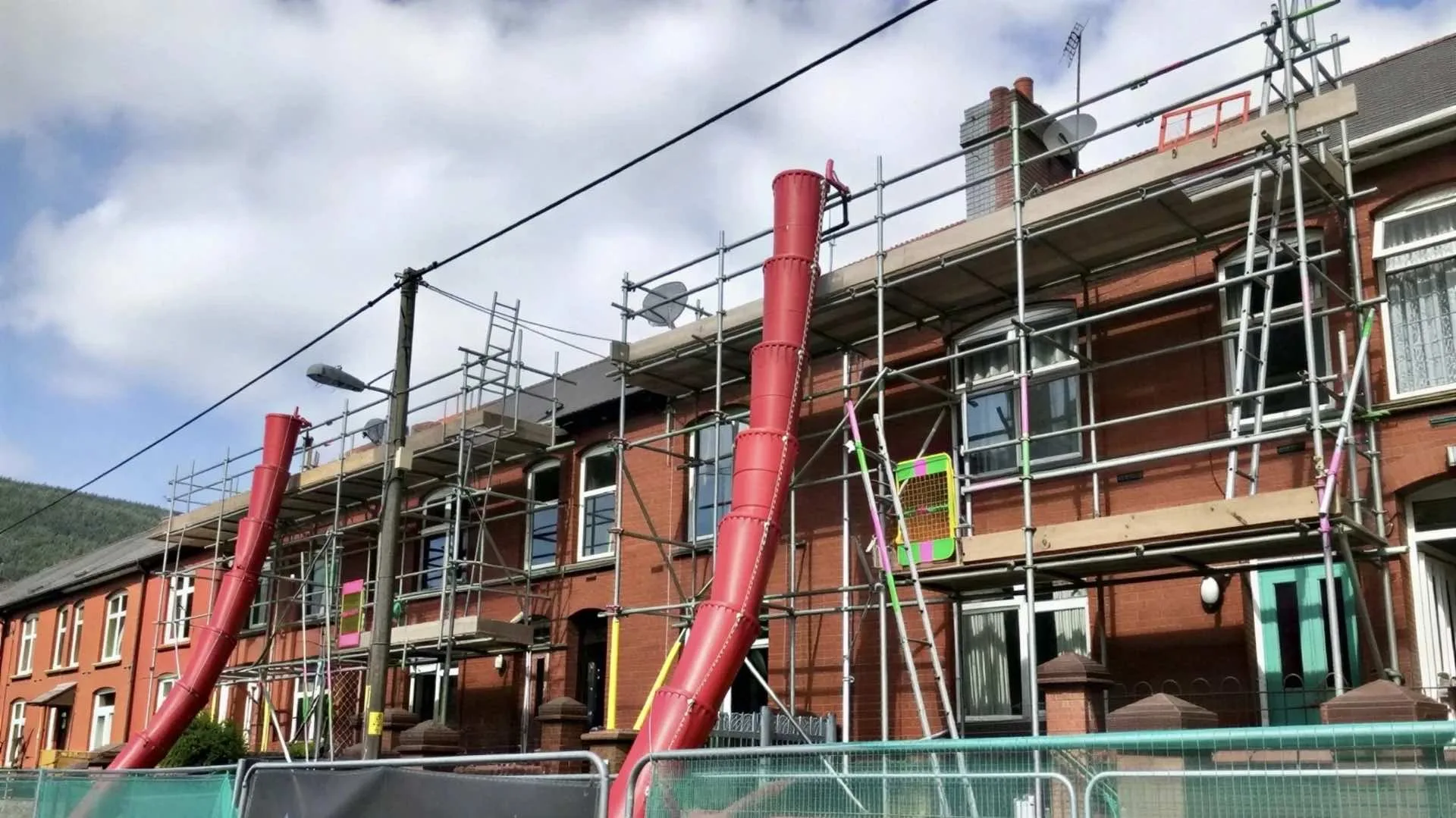

Chimney Scaffolding
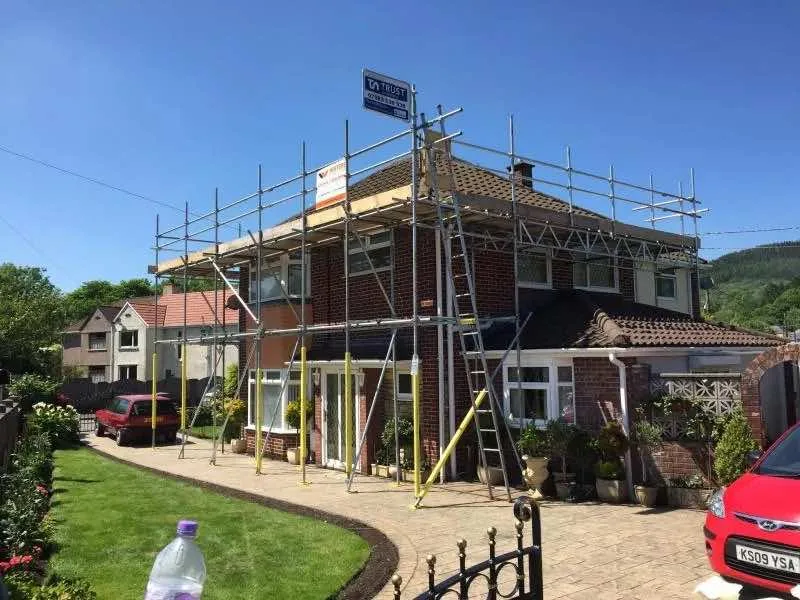
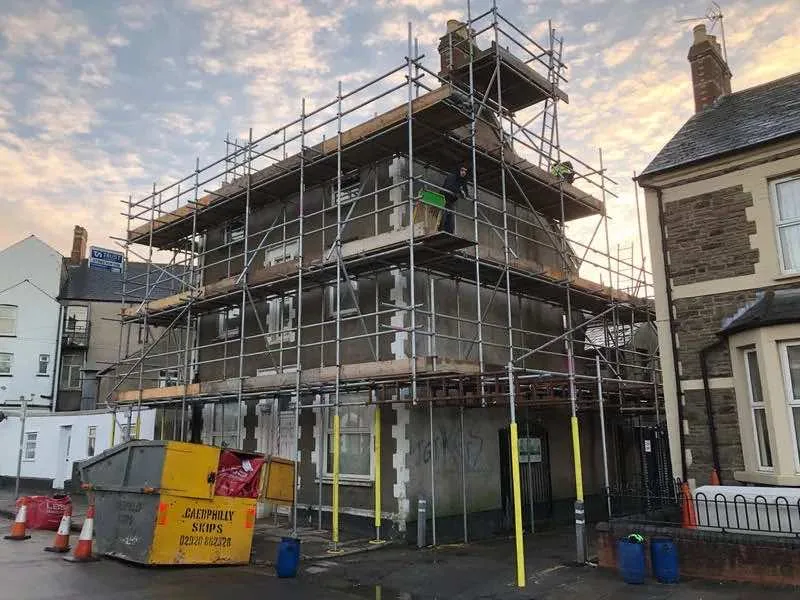
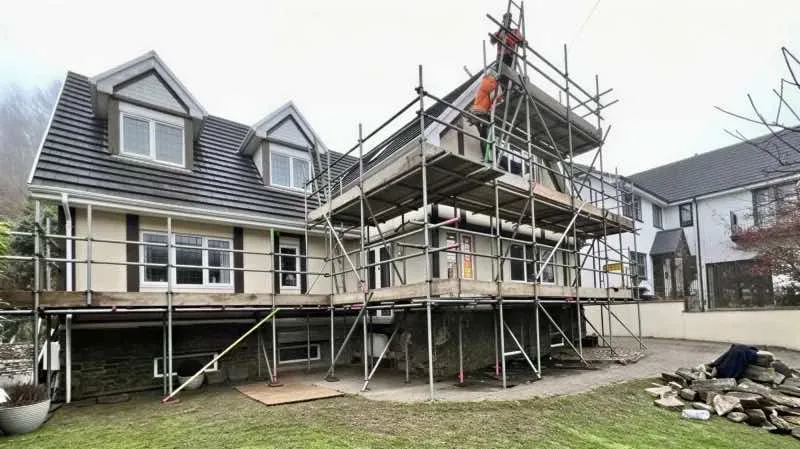
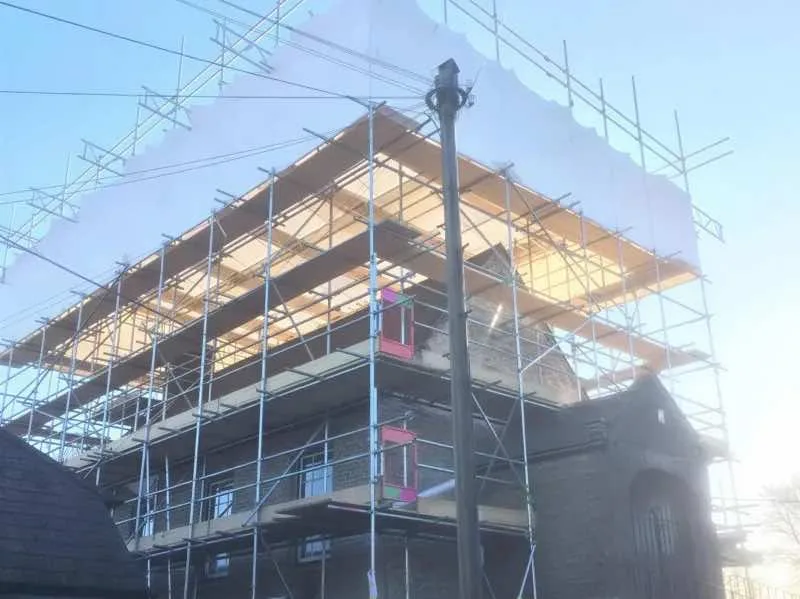
From saddle rigs over the ridge to full wrap-around stacks — Trust Scaffolding erects fully-engineered chimney scaffolds with 360° handrail protection and foam-padded roof brackets. No cracked tiles, no damaged render. Serving Cardiff, Swansea, Neath, and all of South Wales.

Chimney Scaffolding Hire in Cardiff, Swansea & South Wales
Chimney scaffolding is a specialised service that ensures any work on your chimney is done safely, efficiently, and in full compliance with modern standards. Our South Wales scaffolding team brings extensive hands-on experience and certified expertise to every project – from minor chimney repairs to full chimney stack rebuilds. We understand the unique challenges of chimneys perched on steep roofs or tight spaces, and we deliver solutions that keep both workers and your property safe. Serving Cardiff, Swansea, Neath, Port Talbot, Bridgend, Newport and beyond.
Last updated: March 2026
Key Takeaways
- Specialised chimney scaffolding across South Wales – single-side towers, wrap-around platforms & roof-ridge saddle scaffolds
- Full compliance with Work at Height Regulations 2005 & TG20:21 design standards
- CISRS-certified scaffolders with CHAS accreditation & £10m public liability insurance
- Edge protection, debris netting & optional temporary roofing for all-weather projects
- Free site surveys, transparent fixed-price quotes & flexible hire periods
Why Chimney Scaffolding Matters in 2026
In 2026, safety and compliance are more critical than ever in construction and home maintenance. Chimneys sit at the highest, often most precarious point of a building, so any work on them carries significant risk. Proper chimney scaffolding provides a stable, secure platform at height, preventing the falls and accidents that might occur with ladders or makeshift setups. Industry data consistently show that working at height without adequate support leads to serious injuries – a risk no homeowner or contractor should take.
Moreover, today's regulatory environment demands high standards. The UK's Work at Height Regulations 2005 require that any work above ground is 'properly planned and carried out safely' by competent persons, with robust fall prevention measures. Updated industry guidelines like TG20:21 (the NASC's 2021 guidance for tube-and-fitting scaffolds) set the benchmark for scaffold safety and design compliance. In practical terms, this means that in 2026 a chimney scaffold must be engineered or configured to these modern standards – either following established TG20:21 configurations or with a bespoke design if needed – to ensure structural stability and safety.
Equally important is the protection of your property and project timeline. A well-designed chimney scaffold not only protects workers from falls, it prevents damage to your roof and chimney during works (loose tiles or bricks are caught by toe boards/netting, not by your gutters). It also allows tasks to proceed efficiently even in less-than-ideal conditions. For example, if sudden Welsh rain or high winds roll in, a properly secured scaffold (with the option of adding temporary roofing or sheeting) keeps the project on track safely. In short, professional chimney scaffolding is an investment in safety, quality, and peace of mind – one that modern homeowners, roofers, and builders can't afford to overlook.
Our Roof & Tile Protection Promise
Your number-one fear is a scaffold pole cracking a slate or a base plate damaging your render. These specific measures are in place on every chimney job we undertake:
- ✓ Extra-Wide Sole Boards
Oversized timber pads beneath every base plate — scaffold load is spread across multiple rafters, not point-loaded onto individual tiles or slates. - ✓ Foam-Padded Roof Brackets
Every bracket contacting your tiles or slates is wrapped in protective foam — no scratches, chips, or hairline cracks to the surface. - ✓ Engineered Load Distribution
Scaffold weights are calculated to spread evenly — protecting Victorian slates, clay pantiles, and modern concrete interlocking tiles alike. - ✓ 360° Guardrail Platform
Full handrail protection on all open sides of the working platform as standard — your roofer or mason works safely at ridge height without improvised access.
Types of Chimney Scaffold Configurations
Chimney scaffolds aren't one-size-fits-all. The setup will be tailored to your chimney's location and the work required. Here are the common configurations:
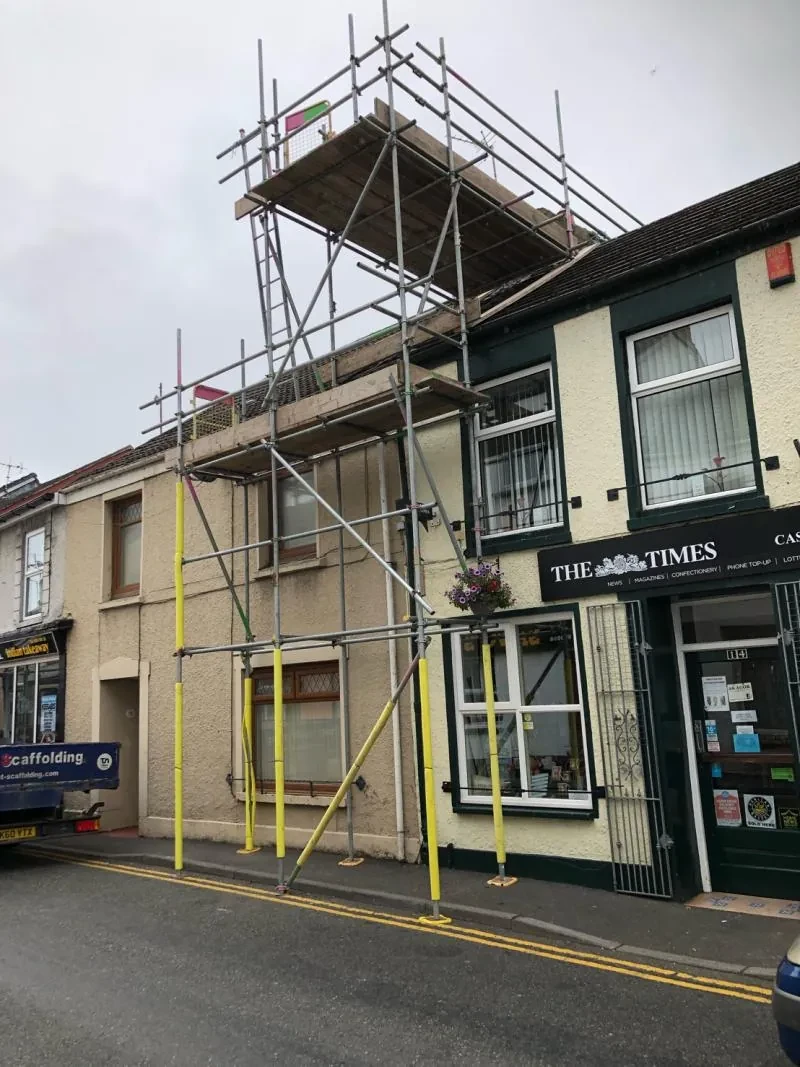
- Single-Side Access Tower: For chimneys at a gable end or needing work on one face, we erect a scaffold tower up the side of the building, reaching the chimney. This provides a platform to access the front or one side of the chimney. It's ideal for small repairs (e.g. replacing a few bricks or minor repointing) where 360° access isn't necessary. The tower is securely anchored to the building and includes handrails and toe boards at the platform level for safety.
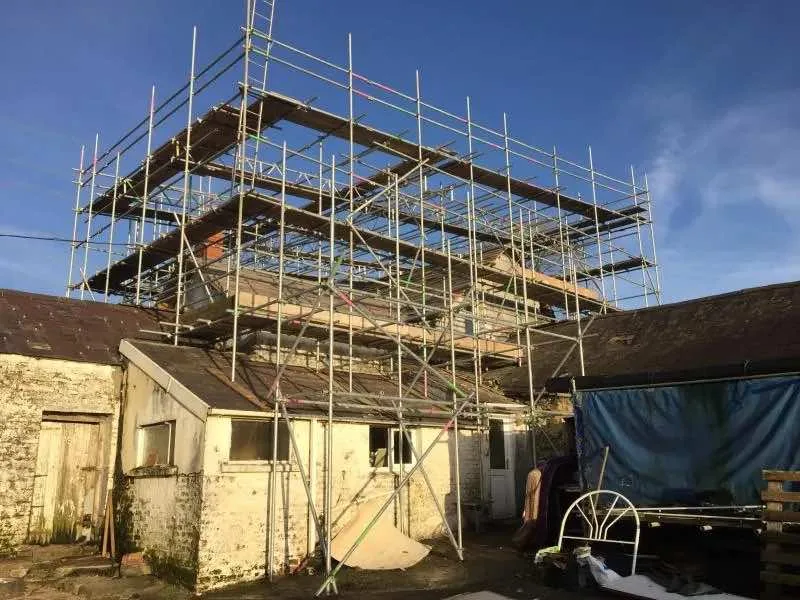
- Full Wrap-Around Scaffold: This configuration envelops the entire chimney stack with a working platform on all sides. A wrap-around scaffold is essential for extensive projects like complete repointing, chimney pot or flue liner replacement, lead flashing on all sides, or chimney demolition, where workers need to reach every side safely. We construct a sturdy frame around the chimney, often starting from the ground or roof level, resulting in stable 'boxing' of the chimney with planks on all sides.
- Roof Ridge "Saddle" Scaffold: When a chimney is located at the centre of a roof or along a ridge line far from the edges, a special roof saddle scaffold is used. This involves building a frame that literally sits over the roof peak like a saddle, creating a flat platform over the ridge to access the chimney. It's supported by beams that distribute weight onto the roof structure (with protective measures to avoid damage). Depending on the roof pitch and complexity, we may combine this with an access tower up to the eaves or gable, meeting the saddle at the ridge.
- Hybrid Solutions: Every property is unique. In some cases, we design bespoke configurations – for example, a chimney that sits between terraced houses might use scaffolding from both sides, tied together for stability. Our team will assess whether the scaffold should be supported from the ground, saddled over the roof, or braced between adjacent structures to ensure maximum safety and minimal disruption.
Regardless of the type, all our chimney scaffolds are built with high-quality tube-and-clamp materials by CISRS-certified scaffolders. This ensures a custom fit to your roof's shape and the chimney's height. By choosing the right configuration, we guarantee both the safety of the work crew and the efficiency of the project – no corner of your chimney is out of reach.
When Do You Need Chimney Scaffolding? Common Scenarios
Stable wrap-around platforms for lime mortar or hydraulic re-pointing. Debris netting catches loose brick and dust before it reaches your gutters or conservatory.
High-clearance platforms give chimney sweeps and lining engineers full headroom to guide flex liner down the flue without straining over the ridge.
Precise height access for plumbers to dress lead flashing, replace soakers, and seal abutments — the delicate waterproofing that stops your stack leaking.
Heavy-duty platforms rated for demolition loads. Debris bags and containment netting keep rubble controlled throughout the stack removal process.
For Tradespeople: Our Roofer & Builder-Friendly Service
Often the person searching this page is a roofer, builder, or chimney sweep looking for a reliable scaffold partner — not the homeowner. We understand your day rate depends on our erection and strike speed; a delayed scaffold is a delayed invoice. Trust Scaffolding operates a rapid-response model for trade clients: same-day site visit, next-day erection for most straightforward chimney rigs, and strike on your schedule. Call us trade-to-trade on 07583 030 338 and mention you are a trades professional for priority scheduling.
Chimney Scaffold Safety Standards
Safety is the cornerstone of our chimney scaffolding service. We adhere to strict UK safety standards and best practices to protect everyone involved – from our operatives to your family and neighbours. Here's how we build trust and safety into every chimney scaffold:
- Competent, Certified Erectors: Our scaffolding team is fully trained and experienced in working at height. All staff carry CISRS scaffolders cards and our company maintains relevant accreditations like CHAS and CITB. A competent person designs and oversees each scaffold erection and dismantling, as required by law.
- Work at Height Regulations Compliance: We strictly follow the Work at Height Regulations 2005 – meaning every scaffold is properly planned, erected, inspected and maintained to prevent falls. Scaffolding is inspected by a qualified person before first use and at least every 7 days thereafter (or sooner if altered or after severe weather). We keep inspection records for full confidence.
- TG20:21 Scaffold Design: Our chimney scaffolds meet or exceed the latest TG20:21 guidelines. This nationally-recognised guidance by the NASC ensures standard scaffolds are built to proven configurations with adequate bracing, ties, and safe load capacities. If your project demands something outside standard configurations, we provide a custom scaffold design with engineering input.
- Edge Protection & Fall Prevention: Every working platform includes proper guardrails, mid-rails and toe boards on all open sides. For chimney scaffolds on pitched roofs, we often install additional edge protection along roof eaves or gable ends. Our team also uses personal fall arrest equipment (harnesses, lanyards) during scaffold erection.
- Secure Anchoring and Stability: We anchor the scaffold to the building at strategic points (using anchor ties or reveal ties in brickwork joints) so it cannot sway or collapse. Adjustable base plates on firm footings (or fixed roof brackets for ridge setups) ensure the scaffold is level and well-supported. Every scaffold is designed to handle expected wind loads and has diagonal bracing for rigidity.
- Permits and Public Safety: If your project requires scaffolding on or over a public pavement or road, we handle the permit (licence) application with the local council on your behalf. Under the Highways Act 1980, any scaffold on a public highway must have a council permit. We carry £10 million in public liability insurance coverage.
- Quality Equipment & Maintenance: We use only industrial-grade scaffolding components (boards, tubes, fittings) that meet British Standards. Slip-resistant scaffold boards, proper access ladders with self-closing gates, and non-slip ladder rungs are standard. For longer projects, we can install temporary roof covers or sheeting to keep your chimney and roof dry.
Roof Ridge Scaffolding & Saddle Scaffolds
Mid-roof chimneys sitting at or near the apex require a saddle scaffold — a purpose-built frame whose load-bearing beams straddle the roof ridge, supporting a working platform directly alongside the stack. The saddle eliminates dangerous ridge-ladder access, provides a stable 360° working surface, and distributes weight across the roof structure rather than concentrating it on a single span. Trust Scaffolding's CISRS-qualified teams design and erect saddle scaffolds for all roof pitches and tile types across South Wales — and the engineered nature of the rig is what separates a professional chimney scaffold from an improvised ladder setup.
Gable End Access & Dormer Chimney Scaffolding
Gable-end chimneys benefit from a simpler single-side or wrap-around access tower erected from ground level. Dormer-adjacent stacks on complex roof forms — hipped roofs, L-shaped extensions, and mansard conversions — require bespoke scaffold designs that navigate roof valleys, hips, and dormers without compromising tile integrity. We assess every dormer and gable-end chimney on-site before quoting to ensure the most efficient and safest scaffold design for your property.
Emergency Storm Damage Scaffolding
After high winds or a severe storm, a leaning stack, displaced chimney pot, or cracked flaunching represents an urgent structural and safety risk. Trust Scaffolding provides emergency chimney scaffolding across South Wales — a rapid response to make the structure safe, contain loose masonry, and give your builder or structural surveyor safe access for emergency repairs. Our teams operate 7 days a week including weekends and bank holidays. For emergency attendance call 07583 030 338.
Never compromise on chimney scaffold safety. Our focus on training, compliance, and proper equipment ensures every chimney scaffold we erect is 100% safe and sturdy. By following modern safety standards – from guardrails and harnesses to TG20:21 guidelines – we protect both the workers on the scaffold and everyone around it. When you hire us, you're choosing a company that makes safety, quality and trust its top priorities.
Chimney Scaffolding Solutions
- Chimney stack removal & rebuild access
- Chimney re-pointing scaffolding
- Chimney pot & cowl replacement access
- Flue liner installation scaffolding
- Lead flashing repair access
- Chimney capping scaffolding
- Ridge-level scaffold platforms
- Debris netting for chimney demolition
- Terraced, semi-detached & detached access
- Urgent chimney scaffold response
Chimney Scaffolding FAQs
Do I really need scaffolding to repair my chimney?
If the repair involves working at roof height, yes – scaffolding is strongly recommended. Chimneys are high and hard-to-reach; attempting work with just ladders is extremely risky and often not allowed under safety regulations. A scaffold provides a stable platform, preventing falls and enabling proper repairs. UK law requires safe access for work-at-height, so using scaffolding isn't just safer – it's a matter of compliance and insurance validity.
How much does chimney scaffolding cost?
The cost varies depending on the height of your chimney, its location (e.g. easy access at gable end or awkward mid-roof), the roof pitch and complexity, how many sides need access, and how long you need the scaffold in place. A simple one-side scaffold on a low chimney will cost less than a wrap-around scaffold on a tall, steep roof. We provide free quotes – an expert will assess your specific needs and give a transparent price breakdown.
How long does it take to erect a chimney scaffold?
Usually just a few hours. In most cases our team can erect a standard chimney scaffold within half a day or less. Simpler setups (like a single tower to a low chimney) might be done in 2–3 hours. More complex configurations or very tall structures could take longer, possibly a full day, especially if extra bracing or saddle components are needed.
How long can I keep the scaffolding up?
As long as your project requires, within reason. We offer flexible hire periods – some chimney jobs finish in a day or two, while others (like a major rebuild) may require scaffolding for several weeks. Scaffolding is inspected every 7 days by law, which we include as part of our service if your hire is ongoing. You rent week by week, and we'll coordinate removal promptly once the work is done.
Will the scaffold damage my roof or property?
No – not when it's installed by professionals. We use padded roof brackets or rubber footing where poles meet tiles, and spread the load to avoid pressure points. Our team evaluates the roof structure and chooses anchor points that are secure yet non-destructive (often in mortar joints or using chimney wrap straps). The goal is that once the scaffold is gone, your roof and walls look exactly as they did before. In the unlikely event of any incidental damage, our insurance covers it.
Do I need a permit from the council for a chimney scaffold?
Only if the scaffold will occupy public space. If we put scaffolding on a public pavement, road, or verge, a permit (scaffolding licence) from the local council is legally required. We handle that process for you, arranging the permit and ensuring all conditions (safety lights, site fencing, public liability coverage) are met. For scaffolds entirely within your property boundary (e.g. in your garden or driveway), no council permit is needed.
Are your scaffolders qualified and insured?
Absolutely. Each scaffolder has CISRS certification (the industry standard qualification). We are also CHAS accredited and CITB registered, demonstrating our commitment to safety and training. We carry robust coverage (up to £10 million public liability) to protect you and us. When you hire us, you're hiring a fully insured, highly qualified crew.
Still have questions? Get in touch with our team — we're happy to help.
Accredited By
Being a member of The Scaffolding Association as Audited Contractors is but one of many accreditations and certifications that we hold.