 Domestic Scaffolding
  Commercial Scaffolding
  Industrial Scaffolding
  New Build Scaffolding
 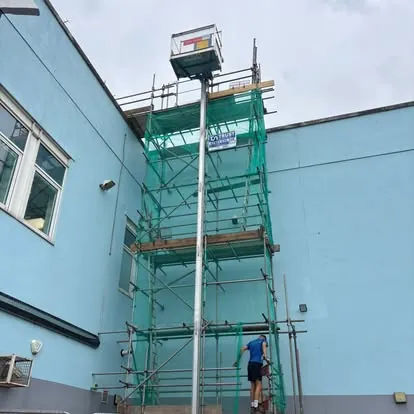 Access Towers
 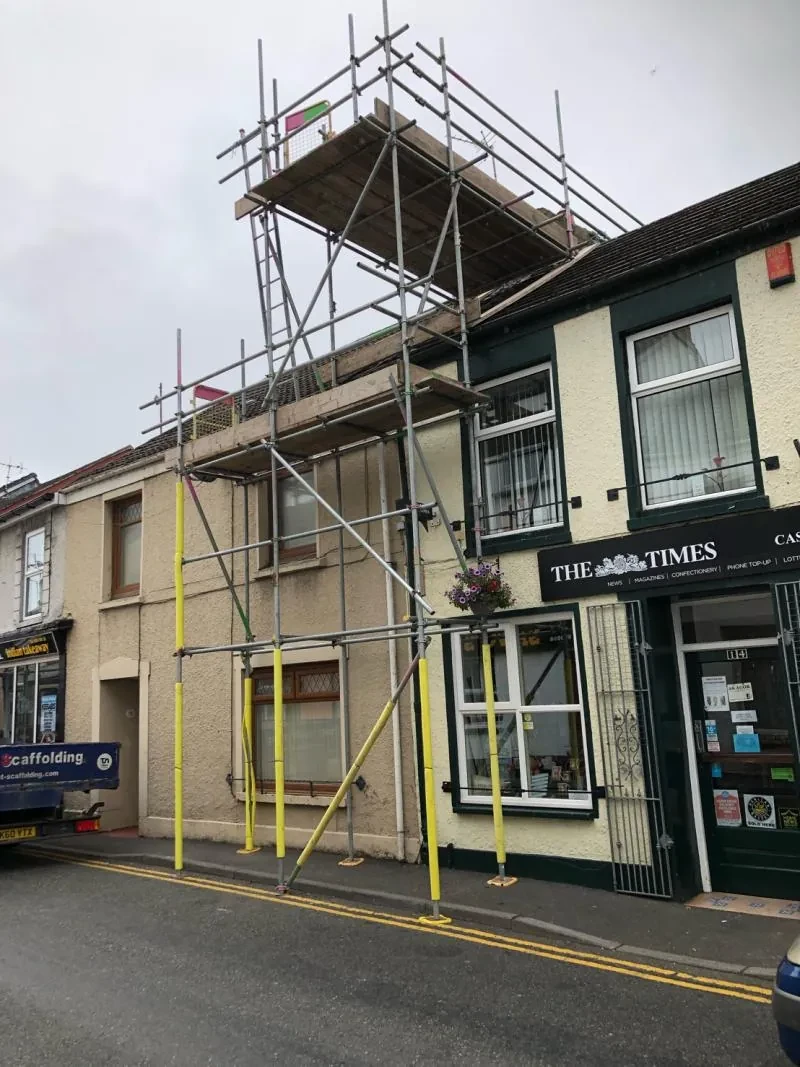 Chimney Scaffolding
 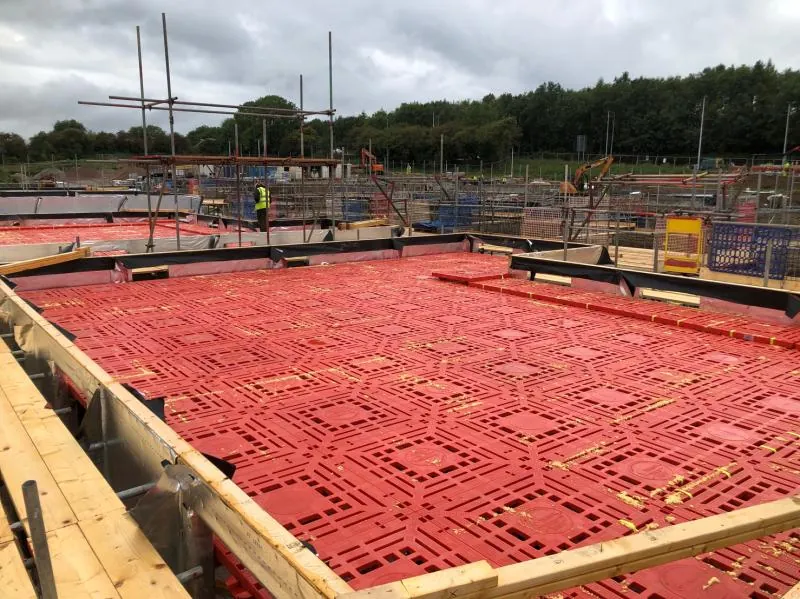 Interior Scaffolding
 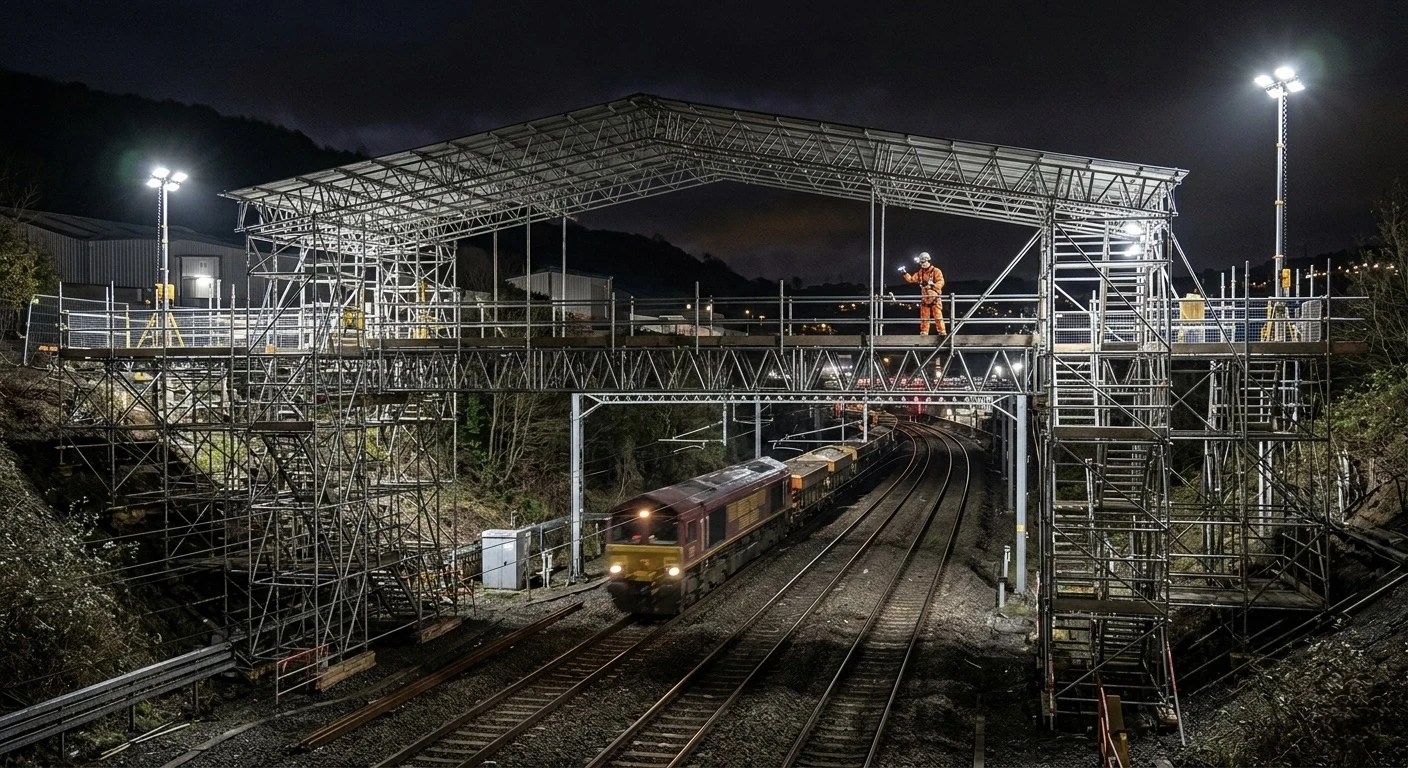 Rail Scaffolding
 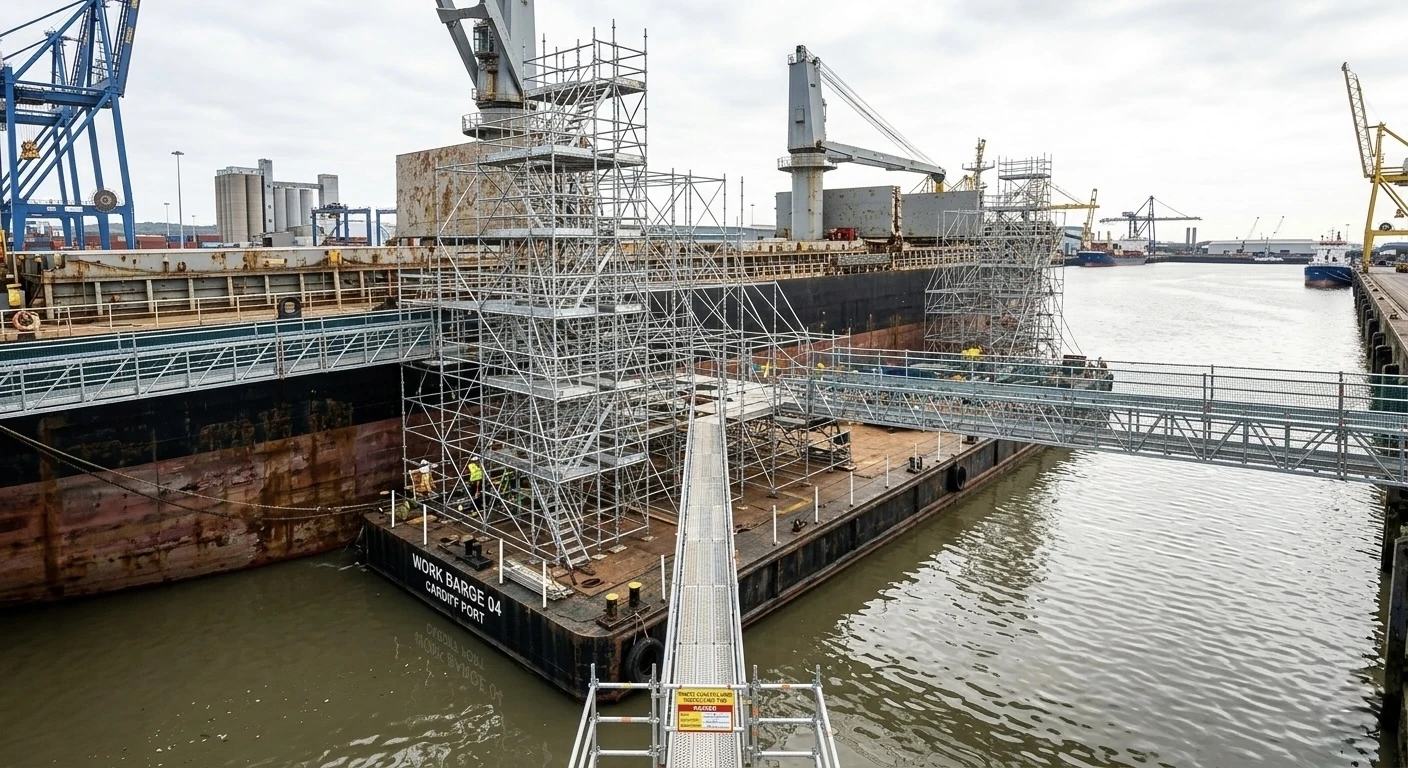 Marine Scaffolding
 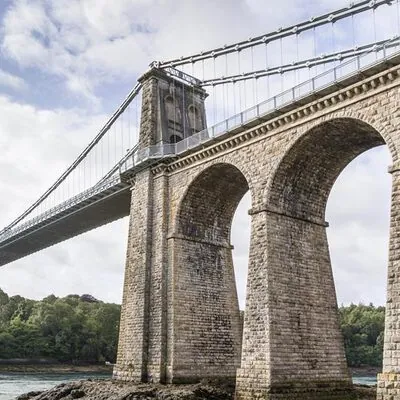 Bridge Scaffolding
  Heritage Scaffolding
 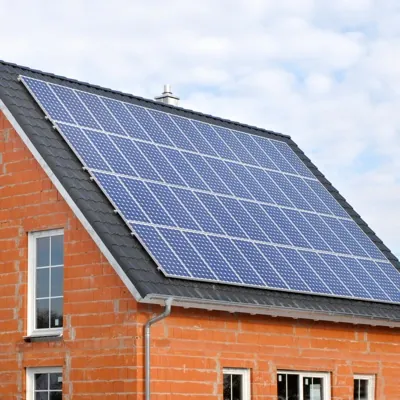 Solar Panel Scaffolding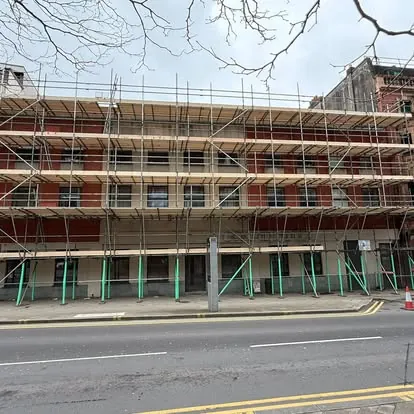
 Swansea
  Port Talbot
  Neath
Neath  Llanelli
  Carmarthen
  Ammanford
  Haverfordwest
  Pembroke Dock
  Cardiff
  Newport
  Bridgend
  Pontypridd
  Merthyr Tydfil
  The Valleys
  Caerphilly
  Bristol
  Avonmouth
  Bath
Bath  Weston-super-Mare
  Gloucester
  Cheltenham
  Taunton


Edge Protection
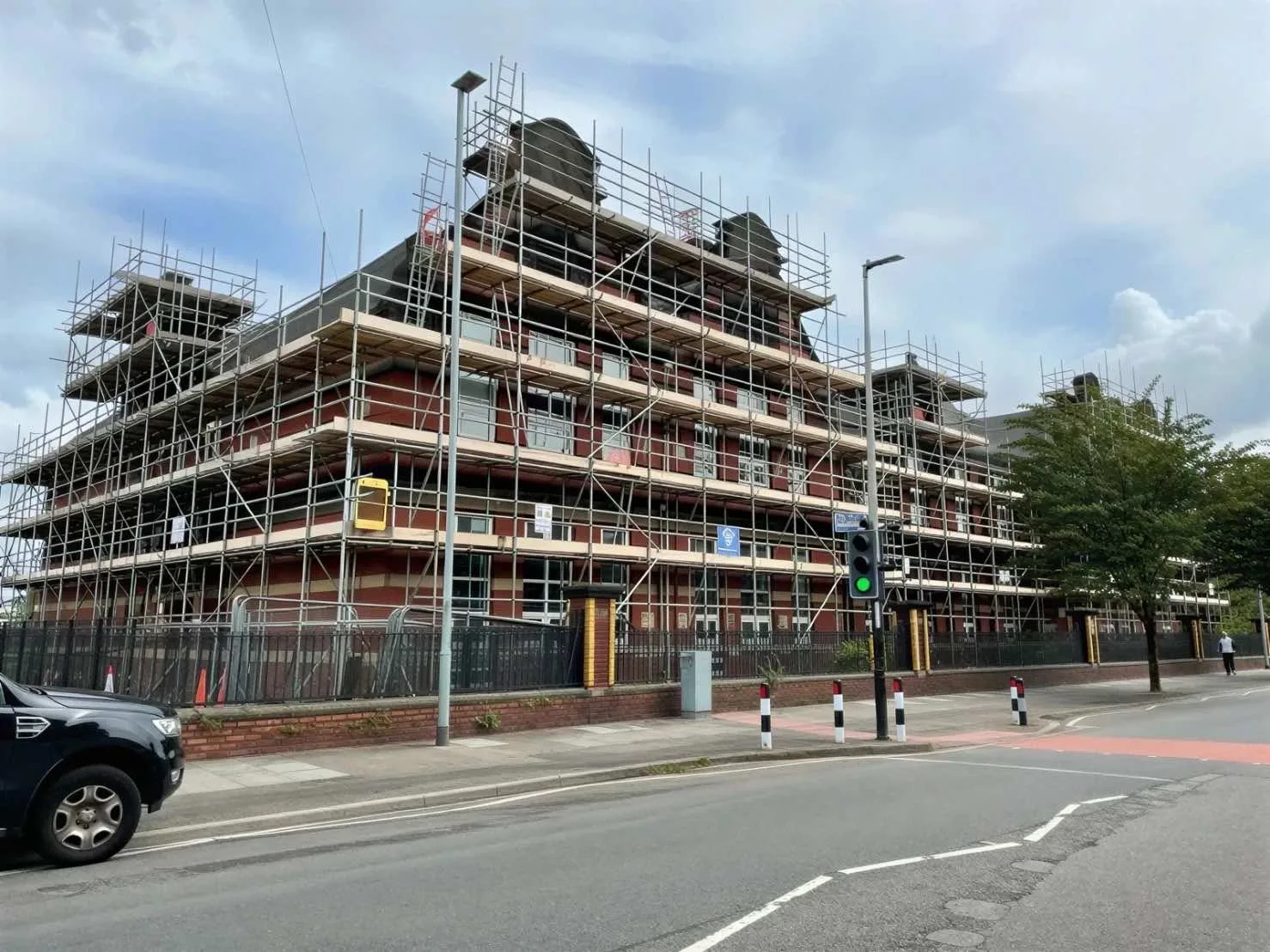
Fully compliant with BS EN 13374:2025 (Classes A, B & C). As a collective fall-prevention measure — sitting higher in the Hierarchy of Risk Control than individual harnesses — Trust Scaffolding's temporary edge protection, pitched roof guardrails, and freestanding roof rail systems protect every worker on site automatically. Serving Cardiff, Swansea, Neath, and all of South Wales.

Edge Protection Hire in Cardiff, Swansea & South Wales
Edge protection scaffolding refers to temporary safety barriers — including guardrails, toe boards, mesh panels, and freestanding rail systems — installed along roof edges, floor openings, stairwells, and elevated work areas to prevent falls from height. As a collective fall-prevention system compliant with BS EN 13374:2025, it automatically protects everyone on site without requiring personal fall-arrest gear.
Last updated: March 2026
Key Takeaways
- Comprehensive edge protection solutions — guardrails, mesh barriers, roof handrails & integrated safety systems to prevent falls from height
- Safety first, compliance assured — aligned with Work at Height Regulations 2005, BS EN 13374:2025 & NASC TG20:21 guidance
- Experienced & accredited team — CISRS-certified scaffolders, CHAS accreditation, IPAF-trained operators & decades of industry experience
- Adaptable to all environments — roof edges, sloped roofs, steel frames, mezzanine floors, stairwells & more across South Wales
- Collective protection advantages — guardrails prevent falls automatically for everyone on site without reliance on personal harness systems
- Integrated end-to-end service — consultation, design, installation, weekly inspections, maintenance & removal all handled by one team
What Is Edge Protection Scaffolding?
Edge protection scaffolding refers to temporary safety barriers installed along edges at height to prevent falls. It typically consists of guardrails (top and mid rails) and toe boards forming a protective barrier on the edge of roofs, floors, scaffolding platforms, stairwells, or any elevated work area. In essence, it's a collective fall prevention system — once in place, everyone on the site is automatically protected without needing to wear personal fall arrest gear. This could include clip-on guardrail systems clamped to a roof's perimeter, mesh barrier panels along the edge of a new floor slab, or handrails around an open stairwell.
In the UK, edge protection is not optional — it is a legal requirement wherever there's a risk of falls. The Work at Height Regulations 2005 mandate that any work at height must be planned and protected with measures to prevent falls. For construction activities, this means using guardrails at least 950 mm high with intermediate rails (such that any gap is under 470 mm) and toe boards approximately 100 mm high at open edges. Edge protection scaffolding provides exactly that — a sturdy guardrail system meeting the required dimensions to stop workers or tools from tumbling over an edge.
Trust Scaffolding supplies and installs edge protection scaffolding across South Wales to keep your projects compliant and safe in 2026. Our solutions help contractors, roofers, solar installers, and maintenance crews focus on their work without fear of a misstep at the edge. By creating a physical barrier at every fall hazard, we help you maintain a zero-fall record on site.
BS EN 13374 Class Reference: Which Class Do You Need?
Edge protection performance is classified by the roof pitch the system must withstand. Safety officers and site managers: specify the correct class from day one.
| Class | Roof Slope | Typical Application | Test Requirement |
|---|---|---|---|
| Class A | Up to 10° | Flat roofs, walkways, floor slab edges, commercial maintenance | Static load only — withstands a person leaning or pushing |
| Class B | Up to 30° | Standard pitched roofs, re-tiling, Solar PV installation, re-roofing | Dynamic test — simulates person sliding from working level |
| Class C | Up to 45° | Steep pitched roofs, heritage slates, specialist roofers | High-energy dynamic test — stops a rapid slide on a steep surface |
Types of Edge Protection Systems We Offer
Edge protection isn't one-size-fits-all. Different projects require different systems, and we provide a full range of guardrail and barrier solutions to suit any scenario. All our edge protection systems are installed by qualified professionals and comply with the latest BS EN standards (specifically BS EN 13374:2025 for temporary edge protection). We conduct a thorough site assessment to select the appropriate system and provide detailed Risk Assessment & Method Statements (RAMS) before work begins:
- Temporary Guardrail Systems (Collective Protection): Classic scaffold handrail setups with top and mid rails plus toe boards. We use tube-and-fitting guardrails or proprietary clamp-on handrails to create instant barriers on roof edges, slab perimeters, mezzanine floors, and more. Two horizontal rails and a toe board can be quickly clamped to a roof parapet, providing an immediate safe barrier for roofers or solar panel installers. On scaffolding platforms, all open sides have guardrails meeting the 950 mm / 470 mm rule.
- Steel Mesh Barrier Panels: Mesh barrier systems combine guardrails with an infill panel for extra security, preventing not only people but also tools or debris from falling. Engineered per BS EN 13374 class requirements (Class A for low-slope or flat surfaces, Class B/C for steeper situations) to resist dynamic forces and wind loads. We often use mesh panels on the edges of steel frame and concrete frame buildings under construction.
- Adjustable Roof Edge Protection for Pitched Roofs: Adjustable railing systems that adapt to various roof pitches, ensuring the guardrails remain vertical and at the correct height even on an incline. These systems attach to the roof structure via temporary brackets under the eaves or ridge to create a continuous handrail — ideal for roofing works on houses or buildings with pitched roofs, such as re-tiling jobs or solar panel installations.
- Freestanding Rooftop Guardrail Systems: Secured by weights and clever engineering, freestanding rails keep the roof surface intact with no drilling required. Often used for short-term maintenance — HVAC servicing, solar panel installs on flat factories, or gutter cleaning on commercial buildings. Despite not being fixed to the structure, these systems are extremely stable and conform to BS EN 13374 Class A requirements for flat / low-slope roofs.
- Integrated Solutions (Edge Protection with Scaffolds or Nets): For comprehensive fall protection, we integrate edge protection with other access systems — installing temporary guardrail posts that work in tandem with safety netting, extending guardrails one lift higher to act as edge protection for a roof, and providing temporary staircase handrails on scaffold stair towers. We offer scaffolding, access towers, safety netting, and edge protection as a complete package.
Every edge protection system we deploy is chosen based on the specifics of your site: the structure type (timber frame, steel frame, concrete, etc.), the work being done, roof slope, potential wind exposure, and so on. Our goal is to provide a fit-for-purpose solution that is easy to install, stable, and fully compliant — so you get maximum safety with minimal disruption to the job.
Solar Industry Solutions: Rapid Edge Protection for PV Installation
2026 is the year of the solar boom across South Wales. Residential and commercial solar array installations have surged, and with every panel-fit team working at roof height, Class B-rated temporary edge protection is a legal requirement on pitched roofs. Trust Scaffolding provides rapid-install guardrail systems specifically configured for the solar industry:
Eaves-level roof guardrails erected and struck in hours — minimal disruption to the homeowner, maximum safety for the installation team on a single-day PV fit.
Freestanding Class A perimeter guardrails — no drilling, no roof penetrations, weighted base system walks the perimeter and is removed without leaving a mark.
Re-access edge protection for battery retrofit visits or inverter servicing — same-day erect and strike available for short-duration maintenance calls.
Solar installers across South Wales use Trust Scaffolding as their dedicated edge protection partner. Priority scheduling, trade pricing, and rapid mobilisation — call 07583 030 338.
Safety & Compliance — Our Top Priority
Safety is the core of our service. Trust Scaffolding's edge protection solutions are designed not just to tick boxes, but to genuinely safeguard workers and ensure legal compliance. We pride ourselves on staying up-to-date with the most current UK regulations and best practices as of 2026, including the Work at Height Regulations 2005, NASC guidance, and British Standards. Key safety and compliance measures we adhere to:
- Work at Height Regulations (WAH) 2005: These regulations form the legal backbone for working at height in the UK. We ensure all edge protection work is properly planned, risk-assessed, and supervised by competent personnel. The WAH hierarchy of control is clear: avoid working at height where possible; if you can't, prevent falls with collective measures; only then consider personal fall arrest as backup. Our edge protection scaffolding enables you to eliminate fall hazards so no one relies on a harness as the primary safeguard.
- NASC TG20:21 Scaffold Guidelines: We follow the latest Technical Guidance 20:21 for tube-and-fitting scaffolding design — the industry gold standard for safe scaffold structures. By complying with TG20:21 for any edge protection that is part of a scaffold, we ensure the supporting structure has the necessary bracing, load capacity, and stability. We also use the TG20 e-Guide software to produce compliance sheets for your specific scaffold layout.
- BS EN Standards Compliance: All equipment and methods align with relevant British and European Standards. BS EN 13374:2025 is our benchmark for guardrail performance, with updated testing requirements and clarified usage classes (A, B, and C) for different roof slopes. We only use edge protection components certified to BS EN 13374 — meaning they have passed rigorous tests for impact and wind loads. Other standards include BS EN 12811 for scaffold structures and BS EN 1263 for safety nets.
- Certified, Experienced Personnel: All our scaffolders and safety installers carry CISRS certification — the industry-recognised qualification for scaffolders for over 50 years. Our supervisors are CISRS Advanced Scaffolders or Scaffold Inspectors, qualified to oversee complex setups. Many staff also hold IPAF licenses to operate MEWPs and powered access. Trust Scaffolding is CHAS accredited and registered with SafeContractor and Constructionline.
- Risk Assessments, Method Statements & Inspections: Before any installation we perform a site-specific risk assessment and develop a comprehensive method statement. During installation, our supervisors ensure adherence to SG4:15 guidelines. Once installed, we offer weekly inspections as required by law (every 7 days and after severe weather), providing written inspection reports and scaffold handover certificates.
- Safety by Design and Documentation: For complex requirements we engage our engineering design team to produce bespoke solutions with design drawings and calculations stamped by a competent scaffold design engineer, in compliance with CDM 2015 regulations. All design and installation processes come with full documentation for your CDM file or any HSE inspections.
In summary, Trust Scaffolding leaves nothing to chance. Falls from height remain the leading cause of fatalities in construction, and we never lose sight of that fact. By using our edge protection scaffolding, you are investing in a safety solution that meets or exceeds all current standards in 2026.
Collective Fall Protection vs. Personal Fall Arrest: The Hierarchy Explained
Site Safety Managers and CDM Principal Designers are required to follow the Hierarchy of Risk Control for work at height under the Work at Height Regulations 2005. Collective protection — such as temporary edge protection, roof guardrails, and pitched roof safety rails — sits above personal fall arrest (harnesses, lanyards) in this hierarchy, because it protects every worker in the area automatically without requiring individual action or correct PPE fit. Our temporary edge protection systems are collective fall prevention measures: once installed, no worker in the area can fall over the edge regardless of whether they are wearing a harness. This not only reduces the risk of a catastrophic fall — it also eliminates the need for anchor points, rope access assessment, and rescue procedures that personal fall arrest systems require. For construction site compliance, specifying collective fall protection as the primary control is best practice and the HSE's clear expectation.
Pitched Roof Safety Rails & Construction Site Compliance
Pitched roof safety rail systems are designed to provide compliant fall arrest at the eaves line of any sloped roof, from a standard 30° house pitch to a 45° heritage slate. Our Class B and Class C-rated systems clamp to rafter feet or fascia brackets without penetrating the tile surface, creating a continuous perimeter guardrail that meets the 950 mm minimum height and <470 mm gap requirements of the Work at Height Regulations. Combined with our digital inspection records and scaffold handover certificates, your Construction Phase Plan compliance is fully supported from day one of site operations.
Our Experience & Credentials
Our edge protection scaffolding services cater to a wide range of construction, refurbishment, and maintenance projects across South Wales. Different environments pose different challenges — we have the experience and equipment to secure them all:
- New Construction & Multi-Storey Buildings: Edge protection safeguards the open edges of buildings under construction — each level's perimeter is secured so tradespeople can install floors, facades, or M&E services with confidence. We also protect floor openings and elevator shafts by providing guardrail enclosures or sturdy cover platforms as required by HSE guidelines.
- Roofing Work (Flat Roofs & Pitched Roofs): For flat roofs, our freestanding or clamp-on guardrails are an efficient alternative to a full scaffold perimeter, quickly set up on warehouses or office roofs. For sloped roofs, specialised edge protection adjusts to the pitch — a temporary roof-edge guardrail at the eaves provides collective protection right at the work area. Our systems follow the principle that collective protection should be in place regardless of height.
- Commercial Refurbishments & Building Maintenance: We integrate edge protection into access plans for existing buildings — refurbishing plant rooms, replacing cladding, or repairing roofs. In warehouses or industrial facilities, we provide guardrail systems around voids or at mezzanine perimeters to protect maintenance personnel. We work frequently with facility managers for planned maintenance shutdowns.
- Industrial and Infrastructure Projects: Our services extend to industrial sites (factories, power plants, refineries) and infrastructure (bridges, stations). We install edge protection during construction or maintenance — around the perimeter of high-rise scaffolds, along the edges of high bay roofs during re-sheeting, and side protection on bridges and highways work.
- Special Scenarios — Public Protection and More: Edge protection can also protect the public — preventing tiles or tools from sliding off during roof or facade work. Combined with scaffolding fans or covered walkways, this provides a comprehensive public safety scheme. We can also provide guardrail solutions for events, temporary structures, viewing platforms, and stages meeting BS EN 13374 Class A and Building Regulations.
No matter the environment — be it a small residential roof job or a large industrial construction — our approach is to assess the specific hazards and select an edge protection strategy that offers maximum safety with minimum interference. We often install edge protection as early as possible and remove it only when all high work is done, ensuring there's never an unprotected edge during the project.
Our Experience & Credentials
When choosing a contractor to provide critical safety systems like edge protection, experience and qualifications matter. Trust Scaffolding brings decades of scaffolding and work-at-height expertise to your project, backed by all the relevant certifications and accreditations you would expect from a leading 2026 scaffolding firm:
- CISRS-Certified Scaffolders: All our scaffolding operatives carry CISRS cards (Construction Industry Scaffolders Record Scheme), proving formal training and competency. From base-level Scaffolders to Advanced Scaffolders and Inspectors, our team handles everything from basic edge rail installs to complex scaffold designs. CISRS is the benchmark recognised by NASC, CSCS, and BuildUK.
- Accreditations (CHAS, SSIP, etc.): Trust Scaffolding is a CHAS accredited contractor — our Health & Safety policies and track record have been vetted through the Contractors Health and Safety Assessment Scheme. We are also accredited under other SSIP (Safety Schemes in Procurement) members and hold appropriate insurance coverage for all operations.
- IPAF & PASMA Trained Staff: Our team includes IPAF-certified operators for cherry pickers and scissor lifts and PASMA-trained staff for mobile access towers — meaning we can adapt to the site and choose the safest access method to implement edge protection, reducing coordination hassle for you.
- Extensive Portfolio and Local Knowledge: We have successfully delivered edge protection and scaffolding services to numerous projects across South Wales, including Cardiff, Swansea, Newport, Neath, Bridgend, and surrounding areas — from city-centre commercial refurbishments to new housing developments in the Valleys to industrial maintenance at Newport's factories.
- Award-Winning Safety and Customer Service: We've maintained an excellent safety record and received positive testimonials for professionalism and efficiency. Our management team includes scaffold inspectors and engineers who are members of professional bodies, ensuring competent oversight at all levels.
In essence, Trust Scaffolding brings together the right people, the right credentials, and the right attitude to deliver edge protection scaffolding you can trust. We understand that you are entrusting us with the safety of your workers and potentially the public, as well as compliance with the law — it's a responsibility we take extremely seriously.
Coordinated Approach with Contractors & CDM Compliance
Delivering effective edge protection isn't just about the hardware — it's also about planning and coordination. We work closely with all stakeholders on a project to integrate edge protection seamlessly into the workflow, with minimal interference and maximum safety benefit:
- Early Planning with Principal Contractors & Designers: We get involved at the planning stage, working with the principal contractor and principal designer (under CDM 2015 regulations) to map out edge protection requirements. By discussing the build sequence and potential fall hazards in advance, we ensure edge protection is in place exactly when needed. Under CDM, every project needs a plan for managing risks — we provide expert input to ensure collective fall prevention is properly addressed from the get-go.
- Temporary Works Design and Handover: Our engineers produce design drawings for complex arrangements and submit them to the principal contractor's Temporary Works Coordinator (TWC) for approval. Once installed, we formally hand over the edge protection with a handover certificate, confirming it has been erected to the design and is safe to use — important for CDM compliance.
- On-Site Flexibility and Supervision: We always have a supervisor or project lead who interfaces with your site manager to accommodate real-time needs. We conduct toolbox talks with all workers in the area when installing or altering edge protection and schedule our work around critical operations to maintain site safety and productivity.
- Coordination with Other Access Services: Since Trust Scaffolding also provides scaffolding, access towers, safety netting, and powered access hire, we coordinate these services as one package — reducing the need to juggle multiple subcontractors. This holistic approach ensures all measures work together with no gaps or overlaps.
- Communication and Professionalism: We provide detailed proposals outlining recommended edge protection, installation method, and cost. On site, our crew leads check in with your site agent daily. We can also provide user inductions for all site workers covering the edge protection system and safe usage.
- Decommissioning and Follow-up: Once work at height is done, we coordinate safe dismantling at a time that suits the site schedule. Our dismantling team works carefully to avoid damage to finished surfaces or structures, removes all equipment promptly, and can participate in post-project reviews.
Through all these efforts, Trust Scaffolding acts as a partner in safety. We understand that edge protection is often one of many moving parts on a construction project — we do everything we can to make it a reliable, well-managed part, so you can focus on building, knowing the edges are secure and compliance is handled.
Our Edge Protection Services
- Free consultation & site survey
- Detailed risk assessment & method statement (RAMS)
- Engineering & design compliance (NASC TG20:21 & BS EN 13374)
- High-quality EN 13374-certified equipment supply
- Professional installation & dismantling
- Integration with scaffold access systems
- Ongoing inspection & support (every 7 days)
- Removal & site restoration
- South Wales coverage (Cardiff, Swansea, Newport, Bridgend & beyond)
- Competitive pricing & clear quotes
Edge Protection FAQs
Do I need edge protection on a flat roof?
In almost all cases, yes. If any work is being done on a flat roof where there's an unprotected drop at the edge, the Work at Height Regulations 2005 apply — there is no specific minimum height exemption, so you need to protect workers on a flat roof just as you would on an elevated platform. Temporary guardrails around the perimeter are the easiest and safest collective safeguard so that anyone on the roof is prevented from falling. UK Building Regulations require permanent guardrails of at least 1100 mm for flat roofs accessed in normal use; for temporary construction works, guardrails of at least 950 mm height satisfy HSE requirements. Best practice is always to install edge protection for any ongoing work on a flat roof — it's both a legal requirement and a critical safety precaution to prevent potentially deadly falls.
What exactly are the legal requirements for edge protection?
The legal requirements come primarily from the Work at Height Regulations 2005, which require that you prevent falls using suitable guardrails, barriers, or similar collective means. Schedule 2 specifies: the top guardrail must be at least 950 mm above the edge; there must be no gap more than 470 mm (so a mid-rail or mesh is needed); and toe boards should be provided at floor level. Guardrail systems must be strong and rigid enough to withstand people falling or leaning against them, meeting standards like BS EN 13374 (for temporary edge protection) or BS EN 12811 (for scaffold guardrails). Edge protection forming part of a scaffold must be erected by competent persons and inspected at least every 7 days. There is also a general duty under the Health and Safety at Work etc. Act 1974 to provide safe workplaces. Our systems are designed to meet all these legal benchmarks — when we install guardrails to HSE/NASC guidelines, you can be confident you're compliant with UK law.
Can edge protection be added to an existing scaffold?
Yes — this is a common scenario. We can extend scaffold standards (the vertical poles) above the working platform and add an extra lift solely for guardrails, effectively turning the scaffold's top level into roof edge protection with guardrail, mid-rail, and toe boards. Alternatively, proprietary clamp-on guardrail posts can be fixed onto scaffold standards and cantilever a guardrail to the edge. We can also rig transoms from the scaffold that support a guardrail running along a roof edge. Any addition to a scaffold is assessed by a competent person to ensure it can support the modification — especially if adding height (wind load) or if people might lean heavily on it. This approach often saves cost compared to a separate freestanding system, and we always re-inspect and tag the scaffold after making modifications.
Is using a harness (personal fall arrest) a good alternative to edge protection?
A safety harness is an important tool but is not equivalent to edge protection and should generally be considered a last resort. Edge protection (guardrails) is collective protection that prevents a fall for everyone in the area automatically, while a harness is personal protection — it doesn't stop a fall from occurring, and if someone slips off an edge the harness catches them only after a short drop, creating a rescue situation. Harnesses rely on each individual to put them on correctly and attach at all times, introducing human error. Regulations explicitly prefer collective preventive measures over personal fall arrest. Harnesses are appropriate for short-duration tasks where guardrails truly can't be installed, but never as the sole protection if a guardrail can be provided. The HSE hierarchy is clear: guardrails first, harnesses only if guardrails can't be used.
What standards should edge protection equipment meet?
Temporary edge protection systems should conform to BS EN 13374, which classifies systems into three classes: Class A for flat surfaces or slopes up to 10° (standard guardrails for typical work sites); Class B for slopes up to 30° (or up to 60° if fall height is limited), which undergo dynamic testing to simulate a person sliding into them; and Class C for steep slopes between 30° and 45°, designed to stop someone sliding rapidly down a steep surface like a pitched roof. Most edge protection on construction sites will be Class A or Class B. We ensure all systems are tested and certified to the appropriate class — for example, our standard guardrails meet Class A requirements (withstanding at least 0.3 kN/m horizontal load and 1.25 kN point load). If part of a scaffold, the system also meets BS EN 12811 load classes. We can provide documentation and markings showing the equipment's class and certification.
How much does edge protection scaffolding cost?
Costs vary depending on scope and duration, but edge protection is usually much cheaper than full scaffolding around a perimeter. Factors include the type of system (mesh barriers vs. simple tube guardrails), building height and access requirements, hire duration, and site logistics. As a rough guide, many edge protection hire services range around £10–£20 per linear metre per month for standard guardrail systems, with installation and dismantling as one-off costs on top. We provide clear, detailed quotations with no hidden fees — each quote outlines design, installation, inspections, dismantling, and hire period. We also offer flexible hire periods and competitive rates, especially when bundled with other scaffolding access services. Contact us for a free, tailored quote — you might find it's more affordable than you assumed to keep everyone safe and compliant.
Still have questions? Get in touch with our team — we're happy to help.
Past Edge Protection Projects
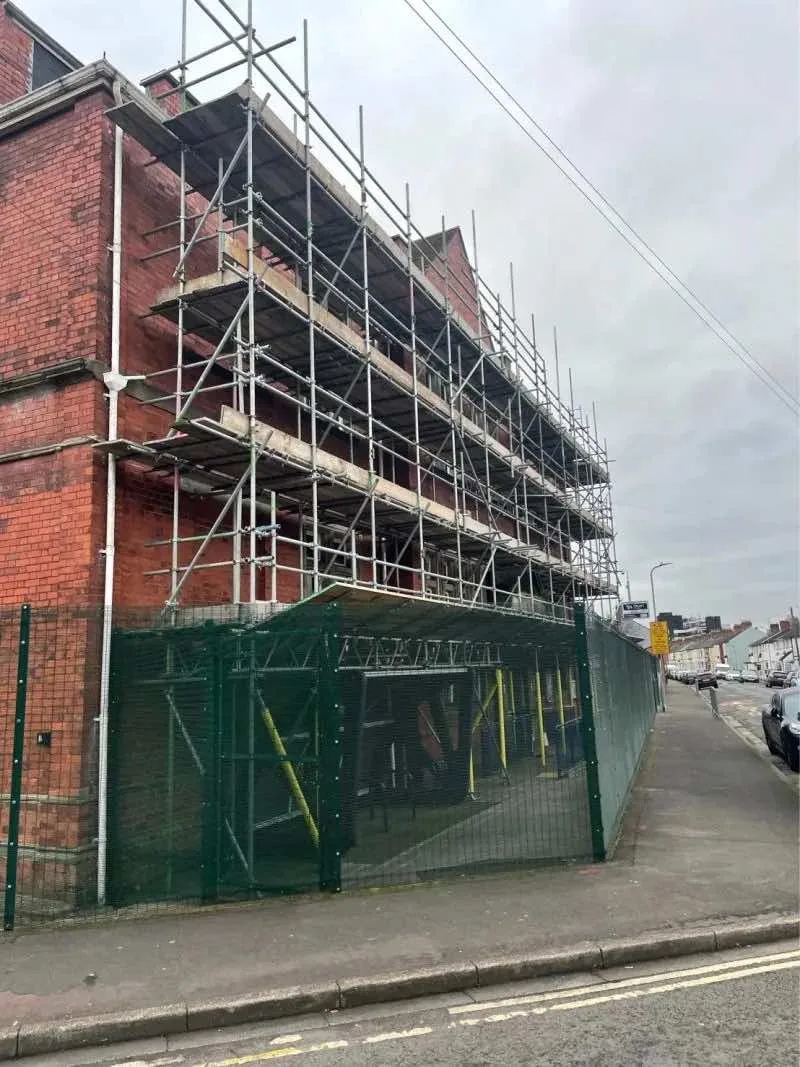
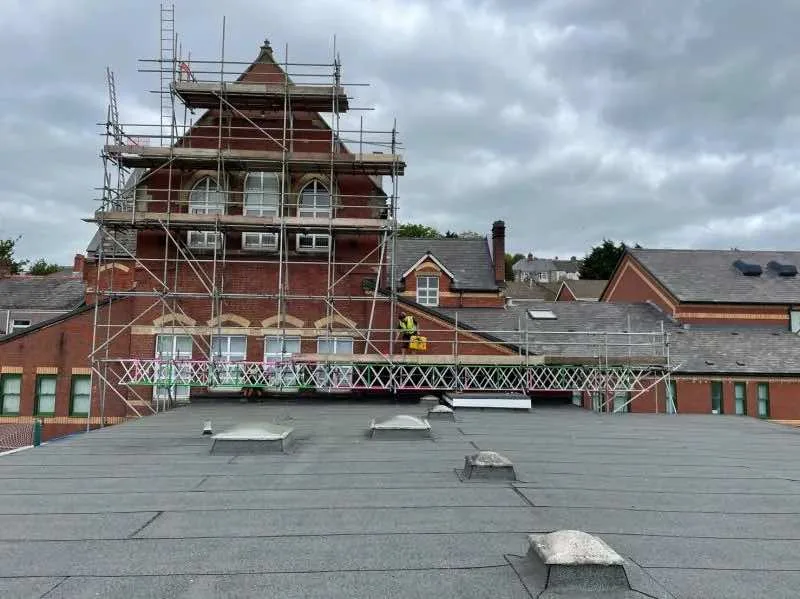
See examples of our edge protection work across South Wales.
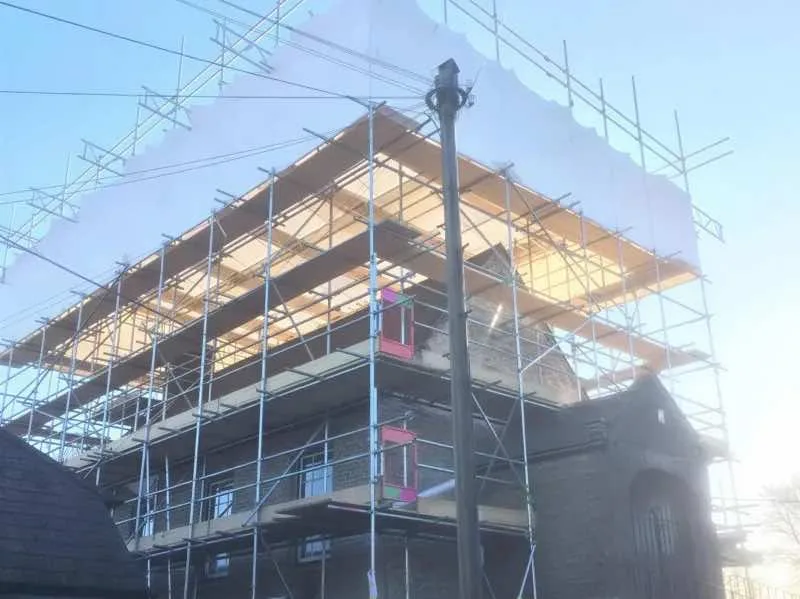
Grand Hotel, Swansea
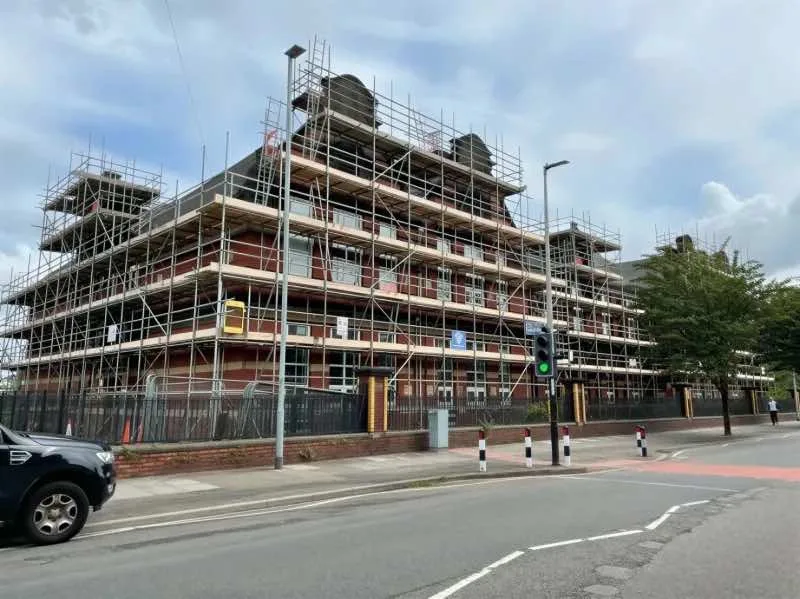
Delivering a full-facade scaffolding solution on Swansea's High Street — one of the city's busiest thoroughfares — requiring precision engineering, advanced pedestrian safety management, and close coordination with the local authority, while keeping the Grand Hotel fully operational throughout.
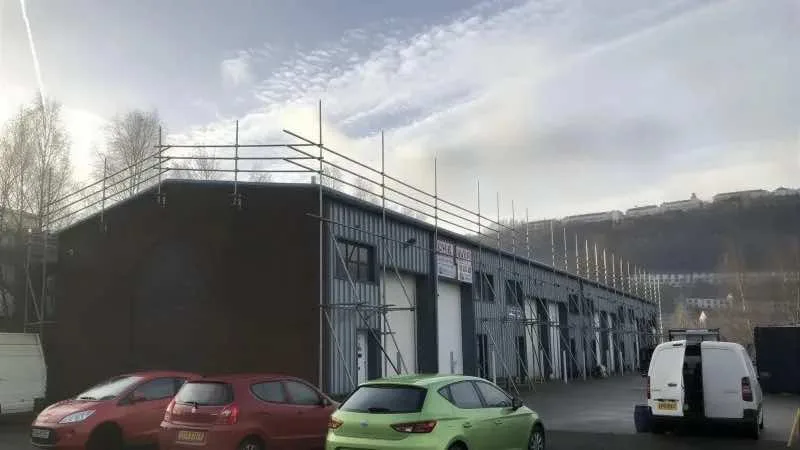
Gestamp, Llanelli
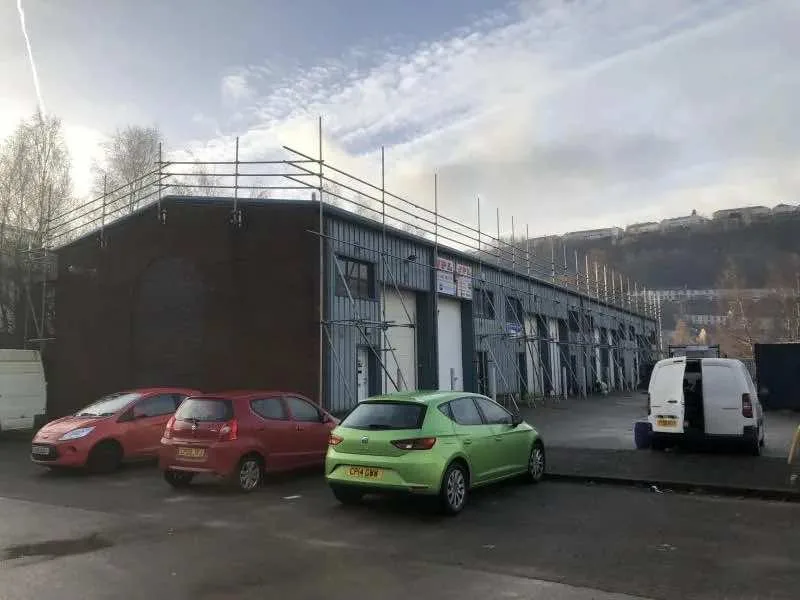
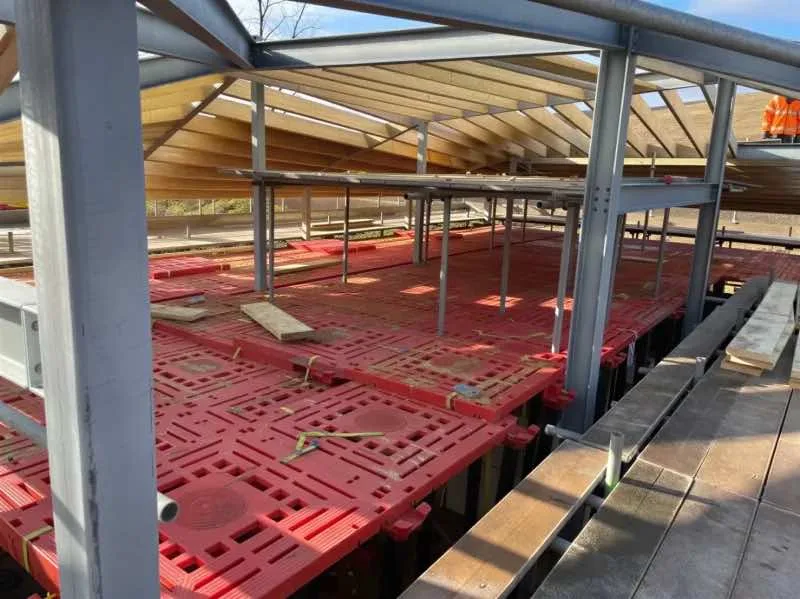
Rapid installation of 400 linear metres of industrial edge protection and extensive T-Deck safety platforms for Gestamp's major automotive manufacturing facility in Llanelli — delivering total facility protection across roof level, mezzanines, and internal working areas in a live production environment.
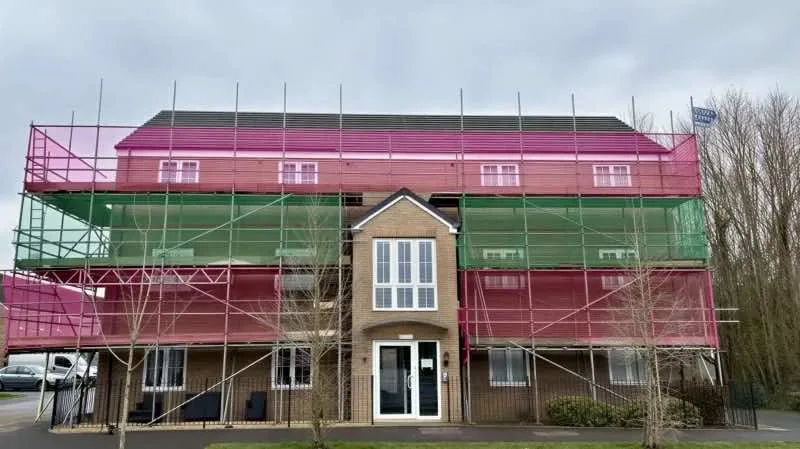
Accredited By
Being a member of The Scaffolding Association as Audited Contractors is but one of many accreditations and certifications that we hold.